
Last updated: November 19, 2026
Quick answer: after forming an LLC, a freelancer usually needs to update the EIN, bank details, invoice template, contracts, tax forms, insurance, and any local licenses before the next payment cycle.
For What Freelancers Need to Update After Forming an LLC, this checklist shows what to change, what to keep, and what can wait.
Key Takeaways
- After state approval, make the LLC name and tax identity appear on money, contracts, and paperwork.
- Update the invoice template’s sender name, tax fields, and payment instructions right away.
- Contracts and onboarding forms should show the LLC name, the right signer, and any required tax or insurance details.
- Keep tax forms current, store formation records together, and show the split between personal and LLC activity in bookkeeping.
What changes first after forming an LLC?
Once the state approves the filing, the first move is to put the LLC name and tax identity on every file tied to money, contracts, or paperwork. So the EIN, your business bank account, the invoice template, and the forms clients use to pay you all need a quick pass.
A new approval letter might sit on your desk beside a pile of active clients. Keep billing under the old setup for even one month, and the paper trail turns muddy fast — especially at tax time.
Start with the items that touch cash flow:
- Move future deposits into the LLC bank account.
- Put the LLC legal name on invoices and contracts.
- Use the EIN on forms that ask for taxpayer details.
- Check whether a city, county, or state license needs the new entity name.
That order saves you from fixing the same file twice. Some clients will still have the old name saved on their side, though, so a short transition note may be necessary.
What should I change on my invoice template after forming an LLC?
Change the sender name, tax fields, and payment instructions on your invoice template right away. If your old version used your personal name, swap in the LLC’s legal name; add the EIN only where a form or client actually asks for it.
An ordinary monthly invoice can land in a client’s accounting inbox while the remittance line still shows your personal name. Payment goes through, but bookkeeping now has to reconcile two identities. That’s needless friction.
Update the template in these places:
- Legal business name: use the exact LLC name approved by the state.
- DBA, if any: include it only if you actually registered one.
- Tax ID field: swap in the EIN if the form asks for it.
- Mailing address: use the address tied to the LLC records.
- Payment instructions: match the LLC bank account name.
Keep the numbering system if it already works. Changing invoice numbers, due dates, and payment terms at the same time only stirs up confusion. If you use accounting software, make sure every saved template pulls the new business name before the next billing cycle.
A cleaner template also helps when a client’s accounting team asks for a W-9 or a vendor setup form. The invoice and the tax form should say the same thing.
Which contracts and client forms need an update?
Contracts and onboarding forms need the LLC name, the right signer, and any tax or insurance details the client now expects. Keep old contract language after forming the LLC, and you can end up with the work being done by one entity while another one appears in the paperwork.
A long-term client may send over a new statement of work. The work itself has not changed, but the legal line now needs the LLC name, not the freelancer’s personal name. Miss that, and the contract may stop matching the invoices or the insurance certificate.
Update these documents first:
-
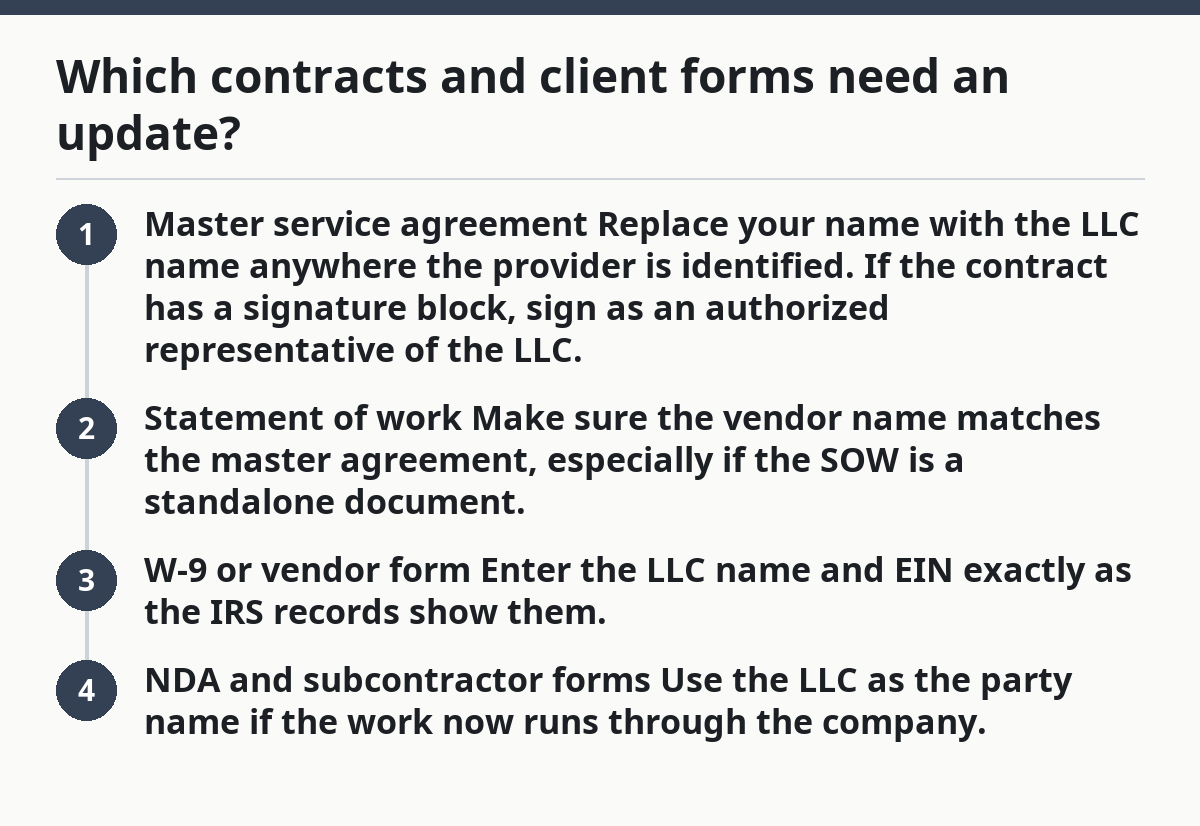
Master service agreement
Replace your name with the LLC name anywhere the provider is identified. If the contract has a signature block, sign as an authorized representative of the LLC. -
Statement of work
Make sure the vendor name matches the master agreement, especially if the SOW is a standalone document. -
W-9 or vendor form
Enter the LLC name and EIN exactly as the IRS records show them. -
NDA and subcontractor forms
Use the LLC as the party name if the work now runs through the company.
Here’s the catch: some clients have their own vendor onboarding rules, and they may ask for a certificate of insurance or a copy of the formation approval. That is not a sign that something is wrong. Usually, it means the procurement team wants a clean file; if you are unsure how to respond, consult a professional and check the client’s vendor instructions.
Which tax forms and records do I need to update?
Update the tax identity on recurring forms, keep the formation records together, and make sure your bookkeeping can show the split between personal and LLC activity. This matters because the LLC changes the paper trail even when the work itself stays the same.
Quarterly filing prep gets messy when old personal payments sit beside new LLC deposits. Cleaning that up later takes longer than setting it up correctly now.
Use this sequence:
- Put the EIN on any form that asks for federal tax identification.
- Keep the state approval document, EIN letter, and operating agreement in one folder.
- Save all invoices, receipts, and bank statements under the LLC name going forward.
- Mark the date the LLC became active in your bookkeeping system.
A simple records folder is enough, but it should be complete. At minimum, keep:
- State formation approval
- EIN confirmation letter
- Operating agreement
- Bank account opening paperwork
- Signed client contracts
- Invoices and payment records
- Insurance policy declarations
- License renewals or filing receipts
Records are not just for tax season. They also help if a client asks who they are paying, if a bank reviews the account, or if an insurer wants proof that the LLC exists.
What insurance should change after LLC formation?
Insurance wording should shift from “personal freelancer” to “LLC-owned business,” and in some cases the named insured needs to be the LLC itself. That covers general liability, professional liability, and any policy tied to a client contract.
A client may ask for proof of coverage before launch. If the policy names you personally but the contract names the LLC, the documents do not line up. Payment can stall, or the project can sit idle.
Check these policy details:
- Named insured: should match the LLC name where appropriate.
- Policyholder address: should match the current business mailing address.
- Certificate holder: list the client exactly as requested.
- Professional services description: should reflect the work the LLC actually does.
If you had coverage before the LLC, do not assume the old policy will carry over cleanly. Ask the insurer to confirm whether the LLC needs to be added, substituted, or named on a fresh policy. A 10-minute call can save a claim dispute later.
Who Should Skip This: a freelancer with no client contract requirements and no active policy may not need to rush into changing coverage the same day, but the LLC name still needs to match the next policy issue date.
Buy this if: a freelancer signs client contracts that ask for proof of insurance.
Skip this if: a solo worker has no contract requirement and no current policy to amend yet.
Do I need to update my business licenses and permits?
Any license or permit that shows the old sole proprietor setup, the old legal name, or the wrong tax ID needs an update. Local agencies often care about the exact name on file, not just the trade name you use on invoices.
Your city license may still list your personal name while the invoices and contracts now show the LLC. That mismatch can trigger a renewal issue or a rejected filing, especially if the office checks documents line by line.
Check these places:
- City business license
- County registration
- Sales tax permit, if you have one
- Professional or occupational license
- Home occupation permit, if your city requires it
Do not guess on this part. Some permits stay with the person, some transfer to the entity, and some need a new filing. Pull each license file and compare the name, address, and tax number against the LLC records.
A clean file also helps if you ever need to show a client that your business is current. One mismatched permit can look sloppy even when everything else is right.
What do I tell clients after I form an LLC?
Tell clients only what they need to keep paying you without interruption: the LLC name, the EIN if they require it, and any new payment or remittance details. You do not need a long announcement; you do need a clear one when invoices or contracts will now come from a different legal entity.
A retainer client may already have your old name saved in their AP system. Say nothing, and the next invoice may bounce between departments for a week.
Use a short update that covers:
- The LLC’s legal name
- The date the change takes effect
- Whether future invoices come from the LLC
- Any new remittance name or tax form details
- Whether the work scope or rates change
If the client uses vendor onboarding, ask for their preferred form. Some will want a new W-9, some will want an updated contract signature, and some will only need the new invoice template. You do not need to over-explain the formation itself.
A simple notice protects the cash flow you already earned.
What can wait until later?
Cosmetic updates that do not affect payment, tax filing, or legal paperwork can wait. A website bio, social profile, portfolio footer, and email signature can all change after the core records are fixed.
The LLC may already be live, the bank account open, and clients paying through the right entity. Your LinkedIn headline could still show the old version. That is not the fire. The mismatched invoice is.
Postpone these until the core items are done:
- Website “about” page
- Social media bios
- Profile photos and banner graphics
- Old PDF portfolio files
- Archived proposals that are already signed
Here’s the catch: if you keep sending proposals under the old name for months, the brand split gets harder to explain. Set a date to sweep your public materials after the paperwork is stable.
A tidy public profile matters, but it is not the first domino. Legal name, tax ID, and payment details come first.
What should I keep in one place after LLC formation?
Keep one master file with the formation approval, EIN letter, operating agreement, insurance declarations, licenses, and updated client documents. That folder becomes the source of truth when a bank, client, or tax preparer asks for proof.
February can bring a client requesting your vendor file, and you hunting through email for a state approval PDF from 8 months ago. One folder ends that scramble.
Store these items together:
- State approval notice
- EIN confirmation
- Operating agreement
- New invoice template
- Updated W-9
- Insurance certificate
- Business license copies
- Signed contracts with the LLC name
Keep both a digital copy and a backup copy. If you use cloud storage, make the folder name obvious, like “LLC records 2026.” That sounds simple because it is.
This is also where the hub article on freelance business formation and setup fits best if you need the full setup sequence. This page is only the post-formation update list.
What should I change first after creating an LLC?
Change the payment and tax documents first. The LLC name, EIN, bank details, and invoice template are the first files that should match the new entity, because those are the places clients and tax records will touch most often.
Do I need to update my invoice template after forming an LLC?
Yes, you should update the invoice template. The sender name, tax ID field, and payment instructions should reflect the LLC so clients pay the right entity and your records stay clean.
Should I notify clients after I form an LLC?
Yes, if the legal name on invoices or contracts changes. A short notice is enough when clients need the LLC name, a new W-9, or different remittance details to keep payments moving.
What documents should I store after LLC formation?
Keep the formation approval, EIN letter, operating agreement, updated contracts, invoices, insurance papers, and license records together. That file becomes the main reference when a client, bank, or tax preparer asks for proof.
Drafted with AI; not yet reviewed by a person.
