

Last updated: November 20, 2026
Key Takeaways
- Use an owner draw for personal use, and match it with a same-day bookkeeping entry.
- Separate the transfer from the spending, then label it correctly with the right date and amount.
- Keep a dated bank record, bookkeeping note, and clear memo for each move.
- Use reimbursement for business costs paid personally, and owner draw for business money going to personal use.
Freelancers need a clean way to move money from a business checking account to a personal bank account without muddying the books. How Freelancers Move Money Between Business and Personal Accounts Safely starts with an owner draw, recorded the same day, and business spending kept out of the transfer. The steps below settle how to do that without turning a simple transfer into a bookkeeping mess.
The owner draw process in plain English
For How Freelancers Move Money Between Business and Personal Accounts Safely, the clean move is an owner draw from the business checking account to your personal bank account, with a matching bookkeeping entry that shows the money left the business. That keeps the cash trail clear.
For a sole proprietor or single-member LLC taxed as a disregarded entity, an owner draw is usually the right label. If the business is taxed as an S corporation or partnership, the labels change, and the payroll or distribution rules can change too. That’s why the accounting name matters.
The right method can be boring.
- Bank transfer
- Debit card cash withdrawal
- Check written to yourself
- Cash transfer through a banking app, if the account allows it
The boring part is the point. A clean draw should show four things: the date, the amount, the source account, and the destination account. If the bank statement and the books tell the same story, the money move stays easy to explain later. For more on entity differences, see the IRS guidance on business structures and S corporation compensation.
How do freelancers move money between business and personal accounts?
Freelancers move money safely by separating the transfer from the spending, then logging it as an owner draw or reimbursement with the right date and amount. That means the money comes out of the business account first, then lands in the personal account, and the books reflect that same transfer.
Here’s the catch: the bank transfer is only half the job. If you skip the bookkeeping entry, the payment can look like income, an expense, or just a mysterious gap. That creates trouble during tax prep and when you try to explain account activity.
Use this order every time:
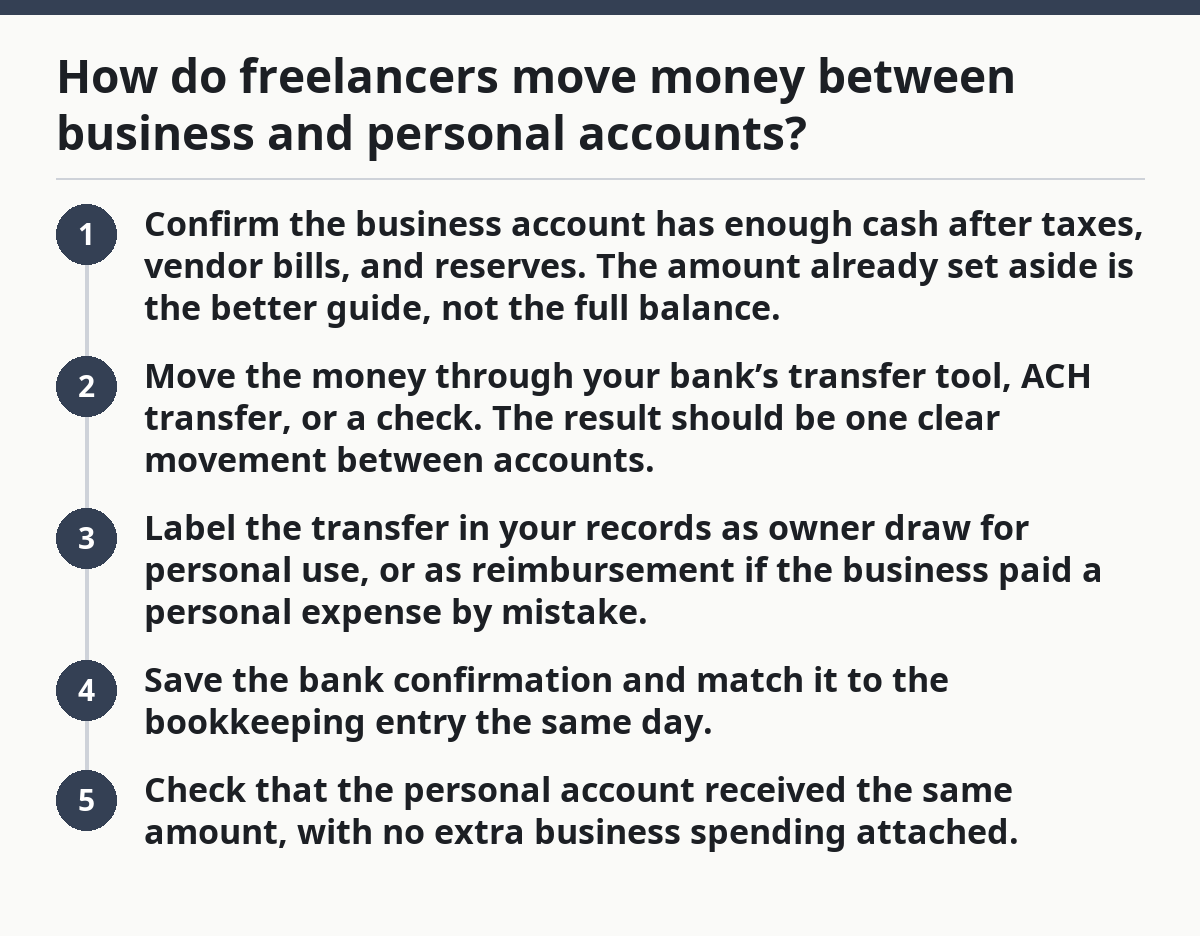
- Confirm the business account has enough cash after taxes, vendor bills, and reserves. The amount already set aside is the better guide, not the full balance.
- Move the money through your bank’s transfer tool, ACH transfer, or a check. The result should be one clear movement between accounts.
- Label the transfer in your records as owner draw for personal use, or as reimbursement if the business paid a personal expense by mistake.
- Save the bank confirmation and match it to the bookkeeping entry the same day.
- Check that the personal account received the same amount, with no extra business spending attached.
If the bank charges a transfer fee, record that fee separately. A $3 or $10 bank fee is not the same thing as owner income, and it should not be folded into the draw amount. For bookkeeping basics, the IRS Schedule C instructions are a useful reference.
What bookkeeping records should the transfer create?
The transfer should create a dated bookkeeping entry, a bank record, and a clear memo that says what happened. That’s the paper trail a freelancer needs when the same account pays both business bills and personal bills over the course of a month.
A basic owner draw entry usually needs these fields:
- Date of transfer
- Amount
- Business checking account name
- Personal bank account name
- Category: owner draw, owner contribution, or reimbursement
- Memo or note with the reason
The memo matters more than people think. “Transfer to personal” is better than nothing, but “Owner draw for July living expenses” gives later readers a real trail. If you use accounting software, the transfer should sit on equity or owner’s draw lines, not on income or operating expense lines.
A reimbursement works differently. If you bought printer ink, software, or postage with your personal card for the business, the transfer back to you should be recorded as a reimbursement. That keeps a business purchase from looking like a personal withdrawal.
Keep the records together for at least the tax year involved, and longer if your accountant tells you to. A PDF bank statement, a receipt image, and a bookkeeping note can save hours when a category looks wrong. One missing memo can turn a 2-minute check into a 2-hour hunt. For receipt-retention expectations, see the IRS on recordkeeping.
When should a freelancer use reimbursement instead of an owner draw?
A freelancer should use reimbursement when personal money paid for a real business cost, and use an owner draw when business money is moving into personal use. The distinction is simple, but mixing them up makes the books harder to trust.
Because that distinction matters, picture this: you pay a $64 software bill on your personal card because the business card was empty. That is not an owner draw. It is a business expense paid by you, followed by a reimbursement from the business account back to your personal account.
Use reimbursement for things like:
- Office supplies bought on a personal card
- Mileage or travel the business owes you for, if your records support it
- A software or subscription fee paid from personal funds
- Postage or shipping bought outside the business account
Use owner draw for:
- Paying yourself for living costs
- Moving profit out of the business account after bills are covered
- Taking money home from a sole proprietorship or single-member LLC when the money is yours to take
The risk of getting this wrong is not cosmetic. A reimbursement entered as a draw can hide a business cost. A draw entered as an expense can make profits look smaller than they were. If the business structure has payroll rules, the wrong label can cause bigger problems than a bookkeeping cleanup. When in doubt, consult a tax professional.
The safest way to move money without blurring the lines
The safest way is to keep one business checking account for business money, one personal bank account for personal spending, and move funds only after the business side is covered. That habit protects the records and makes the transfer easy to explain in one sentence.
Now, you might be wondering what “covered” means. It means the money for payroll, taxes, vendor bills, refunds, and a cash cushion stays put before any owner draw happens. A transfer done too early can leave the business short for a $200 invoice or a tax payment that shows up later.
A safe routine looks like this:
- Pay business bills from the business account only
- Set aside estimated tax money before any draw
- Move one draw amount on a set schedule, such as weekly or monthly
- Use the same transfer method each time when possible
- Keep the transfer amount round and easy to trace, such as $500, $1,000, or whatever your books support
The routine matters more than the method. An ACH transfer, a bank-to-bank move, or a check can all work if the record is clear. What breaks safety is blending personal purchases into the business account or using the draw to patch a cash shortage. That turns a simple owner draw into a bookkeeping guess. See also separate business and personal finances guidance from the SBA.
What mistakes cost the most later?
The costliest mistake is treating every transfer like personal spending and never labeling it. That makes tax prep slower, hides the real cash position, and can force a cleanup of months of bank activity. If you are unsure how to classify a transfer, consult a tax professional and check the IRS recordkeeping guidance.
Picture this: a freelancer moves $2,400 from the business account to personal, then forgets whether that was pay, reimbursement, or a refund of a personal expense. The books now need detective work. One messy transfer can create several wrong entries if you let it sit.
Common mistakes and what they can cost:
- No memo — later confusion about why money moved
- Wrong category — business expenses and owner draws get mixed
- Using the same account for everything — the bank feed becomes hard to read
- Moving money before taxes are set aside — cash runs short when a bill arrives
- Treating reimbursements like draws — business costs disappear from the books
Fixes are simple, but they only work if they happen right away. Write the transfer memo the same day. Keep one line for owner draw, one line for reimbursement, and one line for any bank fee. If a transfer was wrong, correct the entry instead of leaving a bad label in place. A clean record is easier to keep than to rebuild.
How should the records tie back to tax time and cash control?
The records should show that money moved after the business paid itself first, and they should make the cash trail easy to follow at tax time. That means every draw, reimbursement, and owner contribution has a date and a reason that match the bank activity.
This is where many freelancers slip. A bank account can show money leaving, but tax prep needs the story behind the transfer. A $750 draw and a $750 reimbursement may look similar in the bank feed, but they belong in different places in the books.
Keep these habits:
- Save bank statements in monthly folders
- Keep receipts for any personal spend the business must repay
- Match each transfer to one bookkeeping line
- Use the same naming style every time, such as “Owner draw – May”
- Keep business and personal spending separate after the transfer lands
For a deeper setup on account structure and payment flow, the hub on freelance banking and payment accounts is the right next stop. It sits above this process and helps frame the broader system without changing the transfer rules here.
A clean transfer record does more than help tax season. It also tells you whether the business can afford the next draw. If the books show the last transfer was too large, the next one should wait. That is safer than guessing from the bank balance alone.
Can freelancers transfer money to themselves anytime?
Yes, but only if the business can spare the cash and the transfer is labeled correctly. A freelancer can move money from the business checking account to the personal bank account on any day the bank allows it, but the timing should follow bills, taxes, and reserves. A transfer is easier to defend when the books already show the money is available.
How should owner draws be recorded?
Owner draws should be recorded as equity or owner’s draw entries, not as business expenses. The record should show the date, amount, source account, destination account, and a short memo. If the money was repaying a business cost paid from personal funds, record it as a reimbursement instead.
What is the safest way to move business money to personal?
The safest way is to make one clean transfer from the business checking account to the personal bank account, label it as an owner draw, and save the bookkeeping entry the same day. Keep tax money and operating cash in the business first. That simple routine lowers confusion and keeps the paper trail intact.
Drafted with AI; not yet reviewed by a person.
