

Last updated: November 20, 2026
Quick answer: freelancers usually need to update 6 core records after a business name or address change: tax records, bank and payment tools, invoices, contracts, public listings, and saved templates. This article on What Freelancers Need to Update After They Change Their Business Name or Address covers the records most freelancers need to check after the change, with the IRS and USPS as the main U.S. starting points. The exact list varies by jurisdiction, and this is general information only, not legal advice; a qualified lawyer should be consulted for the rules that apply to a specific business.
Key takeaways
- A business name change is not just a logo swap; it can affect tax records, payments, and signed contracts.
- A new address can change where notices, invoices, and tax forms go, even if the work itself does not change.
- A practical order is often: tax records, bank and payment tools, then invoices, contracts, and public listings.
- Keep the old name or address on file where past invoices, 1099s, or bank records still need to match historical records.
- If a record matters for money or legal rights, update it in writing and keep proof of the change.
Who this applies to
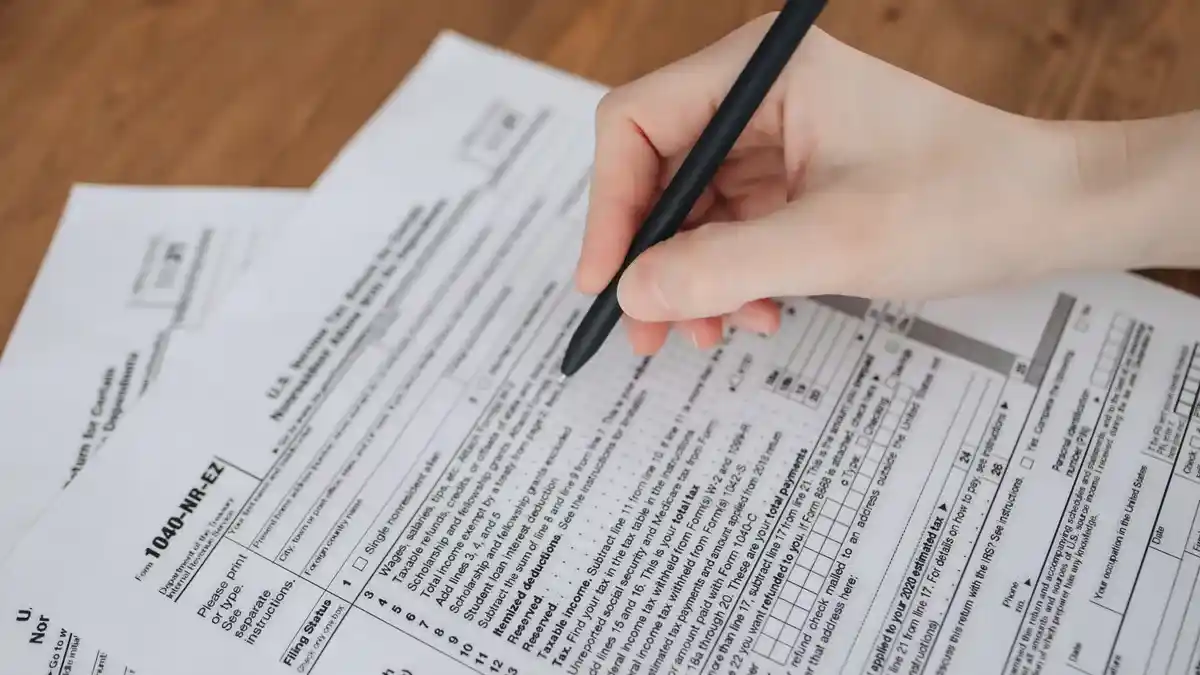
This applies to a freelancer who has already changed a business name, a trade name, or a business mailing address and now needs a business record update checklist. It assumes the freelancer already has a bank account, at least one tax record, and some mix of invoices, contracts, and payment tools such as a payment processor or invoicing system. It also assumes the change has already happened, not that the business is still choosing a name or opening accounts.
The same cleanup list does not fit every case. A sole proprietor, a freelancer using a DBA, and a registered company can have different filing duties, even when the public-facing name looks the same on a website. Since rules vary by jurisdiction, the safe approach is to treat this as a records update problem first and a branding problem second; if the filing is unclear, consult a qualified professional and check the applicable agency guidance such as the IRS business name and address pages.
A useful starting point is the IRS page on business name changes and the IRS page for address changes, because those two records often drive the rest of the cleanup. The U.S. Postal Service change-of-address process can affect mail delivery, but it does not replace a tax update or a bank update. If any part of the business is tied to contracts, licensing, or tax filings in more than one jurisdiction, that is the point to get qualified legal help.
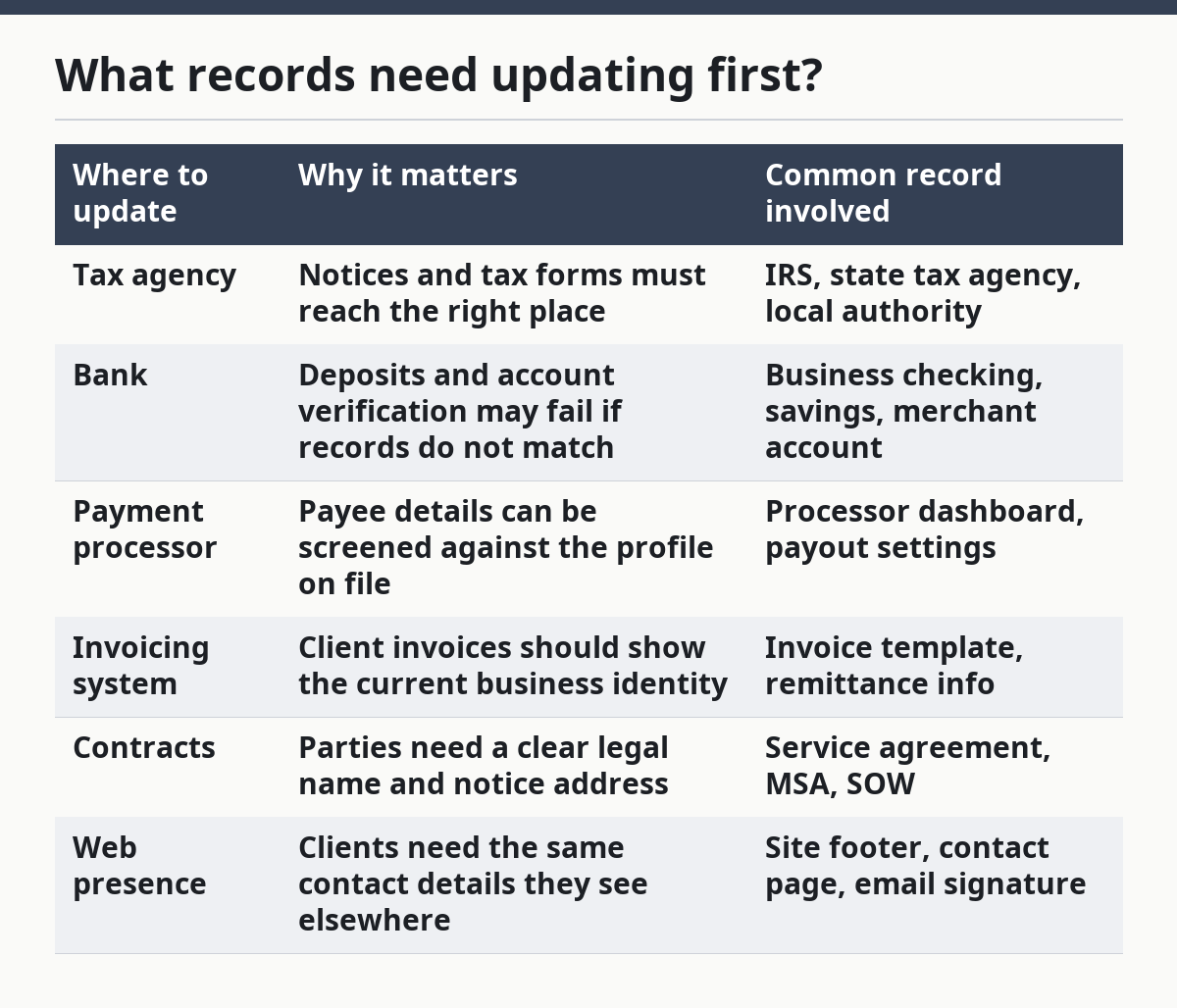
What records need updating first?
The records that matter most are the ones tied to tax reporting, money movement, and legal notice. Start with the business name or address wherever the tax agency, bank, and payment processor see it, then move to invoices, contracts, and the website. If those core records disagree, a client may pay the right account under the wrong name, or a tax notice may go to the wrong place.
A simple order helps. First, update the tax agency record if a form or notice uses the old details. In the United States, that often means checking whether an IRS business address change or name change filing is needed, and whether the business profile linked to an EIN needs to match the new details. Next, update the bank so deposits, statements, and identity checks line up. Then update any payment processor and invoicing system so new bills show one consistent name and address. For a closer look at those steps, see the sections on the bank and payment processor and invoices and contracts.
| Where to update | Why it matters | Common record involved |
|---|---|---|
| Tax agency | Notices and tax forms must reach the right place | IRS, state tax agency, local authority |
| Bank | Deposits and account verification may fail if records do not match | Business checking, savings, merchant account |
| Payment processor | Payee details can be screened against the profile on file | Processor dashboard, payout settings |
| Invoicing system | Client invoices should show the current business identity | Invoice template, remittance info |
| Contracts | Parties need a clear legal name and notice address | Service agreement, MSA, SOW |
| Web presence | Clients need the same contact details they see elsewhere | Site footer, contact page, email signature |
If the business name change is only a public-facing trade name, some systems may let the old legal name remain in the background while the new name appears on the customer side. That is normal in many setups, but it is also where mistakes happen, because the public label and the legal record are not the same thing. For any record that controls tax filing or payment, the legal name and address matter most.
How do you update the bank and payment processor?
The bank and payment processor need the new details in writing, and the account profile should match the name used on tax forms and invoices. For many freelancers, this is often the step that helps prevent failed payouts, frozen transfers, or mismatched statements, but the exact risk depends on the bank and processor, so check their current guidance and, if needed, consult a qualified professional. The IRS, your bank, and the processor’s support pages are the safest starting references.
The cleanest approach is to update the bank record before changing the invoice template, if possible. That gives the account one source of truth when new payments arrive. A payment processor can then be updated to match the same legal name, trade name, and address. If the processor uses a dashboard with separate billing and payout profiles, both fields need review. For related cleanup, see what should go on invoices and contracts and your website and public listings.
A quick comparison helps with the handoff:
| Tool | What to change | What to verify |
|---|---|---|
| Bank | Business name, mailing address, statement address | Statements, deposit references, tax forms |
| Payment processor | Legal name, display name, address, payout details | Payee profile, payout confirmations |
| Merchant account | Business identity and settlement address | Settlements, receipts, chargeback notices |
The problem to watch for is simple: a bank may accept one version of the business name while a processor still pays out under another. That can create a mismatch between a deposit and the invoice that produced it. If the bank asks for a certified document or a specific form, follow the bank’s request unless a qualified professional advises otherwise, because a casual update in an app does not always update the record used for compliance.
What should go on invoices and contracts?
Invoices and contracts should show the business name the client is meant to use, plus the correct address for notices and remittance. An invoice is not just a bill; it is also a record that helps a client match payment to the right vendor profile. A contract is even more sensitive, because the named party can affect who is bound by the agreement.
For invoices, update the header, remittance address, footer, and any tax line that depends on the business identity. If a client pays by bank transfer, the banking details should be checked against the new name before the next invoice goes out. If the business uses recurring invoices, update every template, not just the next one, or the old details will keep resurfacing for months. See also what records need updating first.
For contracts, the key detail is the legal party name. If the agreement names a sole proprietor, a DBA, or a registered entity, that naming should stay consistent with the signature block and notice clause. The notice address matters too. If a contract says notices go to a specific mailing address and that address changed, the contract may still point to the old location unless the parties amend it in writing.
A good rule is to audit the last 12 months of forms that clients can see: master service agreements, statements of work, W-9 requests, invoice templates, and signature blocks. If any of them still use the old business identity, update them before the next billing cycle. The wrong record here can create a payment delay or a dispute about who the invoice belongs to.
Do you need to update tax records and filing forms?
Yes, tax records and filing forms usually need review after a business name or address change. The tax agency record is one of the most important places to keep current because tax notices, filing confirmations, and name matching all depend on it. In the United States, the IRS has specific procedures for business name and address changes, and a freelancer should check the current IRS instructions before filing anything. See the IRS guidance on business name changes and address changes, and confirm whether state or local tax rules add another step.
This is where form names matter. A business may need to review records connected to forms such as W-9, 1099-NEC, and any agency notice that uses the business mailing address. If the business files in more than one place, the state or local tax agency may have its own version of the update process. One address can work for the bank but fail for tax correspondence, so the same change often needs to be repeated in more than one system.
The mechanism is straightforward: tax forms and agency databases match names and addresses against prior filings. If the new name does not align with the old tax record, a notice may appear under the prior identity, or a client may continue to issue forms using outdated details. That does not automatically mean a filing is wrong, but it does mean the record chain is messy.
A prudent cleanup order is tax agency first, then clients who issue tax forms, then internal records. If a freelancer receives Form 1099-NEC or sends a W-9, the details on those documents should match the current business record as closely as the filing system allows. If the business has moved and the old address still appears on a tax form, the issue should be corrected before the next filing cycle.
What should change on your website and public listings?
Your website, directory profiles, email signature, and social profiles should show the same business name and contact address that clients now see on invoices. Public details are not just marketing; they are part of the paper trail a client uses to confirm who they are hiring. If the public record conflicts with the invoice, it creates avoidable doubt.
The minimum update list is the contact page, footer, about page, invoice download page, and any page that names the business in plain text. If the business uses a Google Business Profile, a marketplace profile, or a directory listing, those records should be checked too. A small site can still have 5 or 6 places where the old address hides in plain sight. For related cleanup, compare the site details with the records listed in what records need updating first.
There is one trade-off here. Updating everything at once can create broken links, old citations, or search snippets that lag behind the site change. That is not a legal problem by itself, but it can confuse clients who are trying to confirm where to send payment or mail. Keep one stable version of the business identity and use it everywhere the public can see it.
If the business has a branded email address tied to the old name, decide whether the inbox should remain active for a transition period. A forward or alias can keep old client mail from disappearing. The point is consistency, not speed: one current name, one current address, and one obvious route for notices.
When should you stop and get help?
You should stop the DIY cleanup and get qualified help when the change touches a regulated record, a disputed contract, or a cross-border filing. That is where a simple update can turn into a legal filing issue. The right response is not to guess; it is to verify the rule in the jurisdiction that controls the record.
Multiple jurisdictions are involved: one business record may need updates in more than one country, state, province, or local office — get a lawyer or other qualified adviser who works in that system.
The business is party to signed client contracts: the named party may need an amendment, not just a new invoice footer — check the contract language before changing the documents.
A tax notice has already been issued: the record may need correction through the agency process, not by editing the website — respond to the notice using the current agency instructions.
The bank asks for identity documents you do not have: the account profile may need a formal update — follow the bank’s request and keep copies of what was submitted.
The business name change is not just cosmetic: the legal name, trade name, and filing name may be different — confirm which one belongs on each record before sending forms.
The consequence of getting this wrong is usually delay, mismatch, or a rejected update, but on a legal record it can also create a notice problem or a contract problem. That is why a lawyer is worth involving when the change affects rights, not just branding. A freelancer can handle many routine updates alone, but once the file affects a filing deadline, a notice clause, or a regulated registration, guesswork is the wrong tool.
What are the most common mistakes?
The most common mistake is changing the website first and leaving the tax and bank records behind. That creates a clean-looking public face with a messy back office, and it can lead to checks, deposits, or notices arriving under the old identity. The correct order is to update the records that control money and filings first, then the public pages.
Another mistake is updating only the display name in one tool. A payment processor may show the new name on customer receipts while the bank still uses the old legal name. That split can cause verification issues. The fix is to check both the legal profile and the public-facing label, because those are often separate fields.
A third error is forgetting the notice address in contracts. People edit the signature block and leave the notice clause unchanged, which means a formal email or mailed notice may still go to the old place. The safer move is to review the whole contract template, not only the headline and footer.
A fourth mistake is treating a forwarded mail setup as a full update. Mail forwarding can help during a transition, but it does not change the address on a tax record, invoice, or bank file. The address still needs to be updated where the record lives, or the forwarding ends and the old problem returns; if the filing is unclear, consult a qualified professional and check the applicable agency instructions.
A fifth error is forgetting old invoices and saved templates in the invoicing system. One edited draft does not fix the rest of the library. Audit every reusable template, recurring invoice, and saved client profile so the old business name does not reappear on the next bill.
What records should I update after changing my business name?
Update the tax agency record, bank details, invoicing system, payment processor, contracts, and public web pages. The exact list varies by jurisdiction, but the records that control money and notices come first. If a client can see it or a government office uses it, it needs a fresh check.
Do I need to update my bank and tax records after a business address change?
Yes, those records should be checked after a business address change because they control statements, notices, and tax matching. A mailing address for the website is not enough by itself. The bank and tax agency generally need the new address in their own records, and the change should be mirrored in invoices and payment tools.
What should freelancers change when their business details change?
A freelancer should change every place where the old business identity can still cause confusion: tax records, bank records, payment processors, invoices, contracts, and the website. One consistent name and address across the records that matter is the goal, even though the exact filing steps vary by jurisdiction. If the change affects legal rights or filings in more than one jurisdiction, a qualified lawyer should review the process.
Drafted with AI; not yet reviewed by a person.
