Last updated: October 21, 2026
Key Takeaways
- No universal percentage fits every freelancer; many people start with 25% to 35% and adjust.
- Split each cleared payment the same day into personal pay, tax reserve, and business cash.
- Treat tax reserve dollars as off-limits and keep operating cash for business use only, with professional advice if needed.
- Use one base percentage per payment, then change it only when your tax situation materially changes.
A tax set-aside plan for freelancers is the cleanest way to keep freelance income from disappearing before tax time, and it works best when you split every payment into three buckets: personal spending, tax reserves, and business cash. This guide explains Best Tax Set-Asides for Freelancers: Percentage Methods That Actually Work and how much to set aside for freelance taxes without running a full estimated-tax calculation every time money lands in your account. This is information, not financial advice; for your own situation, a qualified tax adviser can help.
Who this is for, and what it assumes you already know
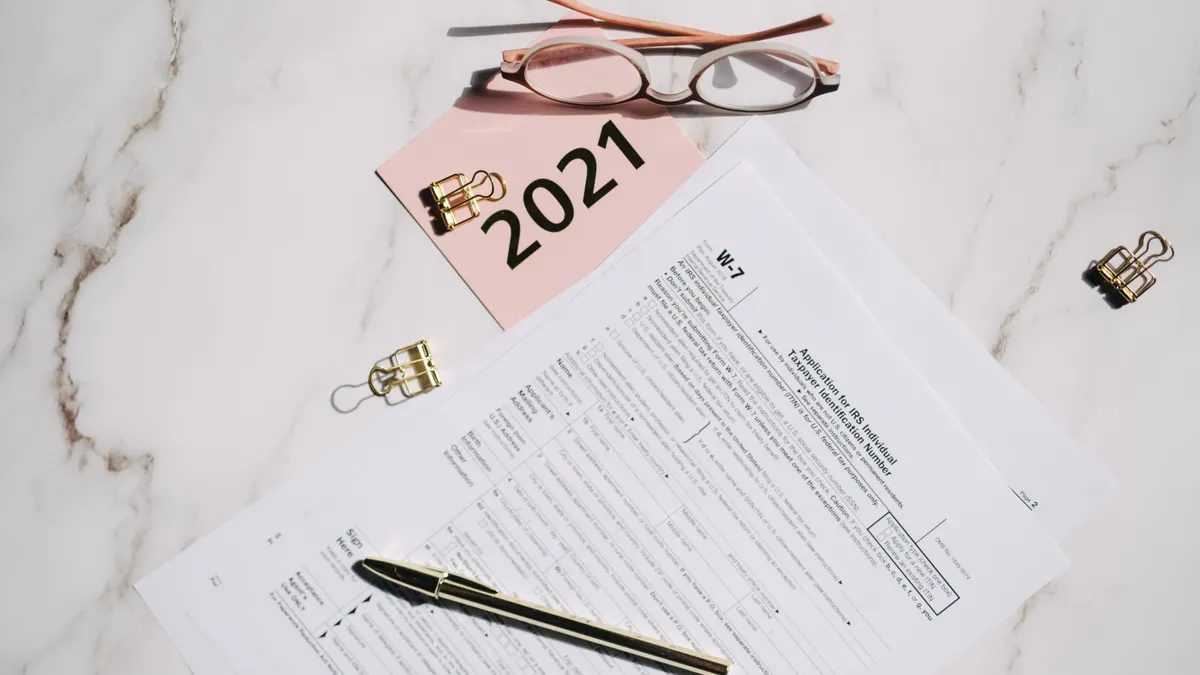
This applies to freelancers, contractors, solo consultants, and other self-employed people with uneven income who get paid in bursts rather than a steady salary. It assumes you already have a basic business checking account, a savings account, and a way to track invoices and receipts, even if that tracking is as simple as a spreadsheet or accounting app.
It also assumes you want a practical reserve method, not a tax-course version of the rules. I’m not going to walk through a full estimated tax worksheet or payment schedule here; that belongs on a separate page. What matters here is how to hold back enough cash for federal income tax, self-employment tax, and state income tax without starving your operating cash.
This approach is not for someone who has no idea what tax year they are in, no separation between business and personal spending, or a tax problem already in motion. If your income is unusually large, highly irregular, mixed across states, or includes payroll, partnership income, or prior-year underpayment penalties, the simple percentage method may be too blunt. In that case, the reserve can still be useful, but it should be checked against a qualified tax professional before you rely on it.
For everyone else, the goal is straightforward: build a reserve rule you can use on every payment, not a formula you have to recalculate from scratch. For a deeper overview of estimated payments, see the IRS page on estimated taxes and the IRS self-employed tax center.
What percentage should freelancers set aside for taxes?
The safest answer is that there is no universal percentage, but a simple 25% to 35% reserve is often the starting range people use for freelance tax set-asides. That range is not a rule of law; it is a working method for separating tax money from the rest of cash flow when income is uneven.
The reason the range is wide is that three different taxes can apply at once: federal income tax, self-employment tax, and state income tax where applicable. Self-employment tax is the Social Security and Medicare tax paid by self-employed people on net earnings, and it can take a noticeable bite out of profit even before federal income tax enters the picture. A freelancer in a state with no income tax may sit near the lower end of the range. A freelancer in a high-tax state, or one with higher net profit margins, may need more.
The percentage method is usually a starting point, not a permanent rule. It works best when you adjust it after you see how your business behaves across a few months. If you are unsure where to begin, set aside one percentage for all gross freelance receipts, then refine later if your reserve consistently sits too high or too low.
A common mistake is to set aside too little because the payment looked small. Tax money does not care that one invoice was only a few hundred dollars. Another mistake is to overreserve so aggressively that business cash dries up and the freelancer starts using the tax bucket as a personal cushion. That creates a second problem when tax time arrives and the reserve has already been spent.
If you want a quick benchmark, think in layers: enough for self-employment tax, enough for federal income tax, and a separate layer for state income tax if your state taxes earned income. That layered view is more useful than a single magic number, because it tells you why the reserve exists and which part of tax liability it is trying to cover. The IRS Schedule SE and Publication 505 are useful references for that broader picture.
How to split one freelance payment into three buckets
The cleanest split is to divide each incoming payment into personal pay, tax reserve, and business operating cash immediately, on the day the money clears. That timing matters because a 48-hour delay is how freelancers accidentally spend tax money on rent, software, or groceries.
Start with a business checking account that receives client payments. Then move the tax reserve into a separate savings account or other clearly segregated account. The operating cash stays in the checking account or a second business subaccount for recurring expenses such as tools, contractors, ads, or platform fees. The point is to prevent the same dollar from being mentally assigned to three jobs.
A simple working method looks like this:
- Decide your set-aside percentage before the money arrives.
- Split each payment the same day it clears.
- Move the tax reserve into savings immediately.
- Leave operating cash in checking.
- Transfer only your owner pay to personal spending.
The most useful habit is to make the transfer rules automatic. If a client pays $1,000, and your reserve rule is 30%, then $300 leaves the usable pile before it starts to feel spendable. The remaining $700 is then divided between business cash and personal pay according to your actual monthly needs. You do not need to calculate the exact tax due on that invoice to make this work.
What should you verify? First, confirm that the reserve has not been mixed back into spending cash. Second, confirm that your business account can cover predictable expenses for the next 30 days. Third, confirm that the percentage you are using still leaves enough money to run the business.
What signals a problem? If every deposit feels like a scramble, the reserve is probably too low or the spending rule is too loose. If the business account is often starved, the set-aside may be swallowing working capital. If the savings account is being raided for “temporary” expenses every month, the tax reserve has become a fantasy, not a reserve.
The method works because it turns tax planning into a habit, not a season.
How do I separate tax money from business cash flow?
You separate tax money from business cash flow by treating the tax reserve as untouchable and the operating account as spendable only for business needs, and a tax professional can help you set the boundaries if your situation is unusual. The distinction sounds obvious, but it is where many freelancers slip.
A business checking account is for movement: invoices in, bills out, transfers to savings, and owner pay. A savings account is for storage: tax reserve dollars sit there until tax payments or year-end use requires them. That separation makes it harder to confuse money meant for the IRS or state tax authority with money needed for next month’s expenses.
The practical rule is simple. If the money is part of your reserve, it leaves checking the same day it arrives or the same week at the latest. If it is operating cash, it stays available only for known business costs. If it is owner pay, move it out only after taxes and business expenses are protected. That order matters because freelancers often reverse it, paying themselves first and hoping the rest will work out.
One useful variation is to keep a second savings subaccount labeled “tax reserve” and a separate one labeled “business cushion.” A cushion is not the same as a reserve. A cushion is money you keep for uneven cash flow, slow invoices, or a software bill that lands at the wrong time. A tax reserve is not a cushion. It is not money you can borrow from because a client paid late.
What makes this method fail is not math alone; it is category drift. The moment tax money is mentally reclassified as “available,” the plan starts breaking. The cure is mechanical: separate accounts, separate labels, and one fixed transfer rule.
This is also where a hub page on freelancer tax planning and estimated payments belongs, because the reserve method only works when it fits into the larger payment calendar and recordkeeping system. See also our contractor tax checklist and self-employed quarterly taxes page.
A practical reserve method that works without a full tax calculation
The practical reserve method is to set one base percentage for every payment, then adjust that percentage only when your tax picture changes materially. It is a rule-of-thumb system, not a replacement for a full estimate.
Here is a workable process:
- Pick a starting reserve percentage. Use a single percentage for all freelance receipts, such as a starting range in the mid-20s to mid-30s, then write it down in one place. Verify that the percentage is high enough to cover federal income tax, self-employment tax, and any state income tax that applies. A problem shows up if you cannot explain why the number exists.
- Apply the percentage to every client payment the day it clears. Move the tax share immediately into a savings account. Verify that the transfer happens before any personal spending. A problem shows up if you keep “just this one invoice” in checking for later.
- Keep operating cash separate from tax money. Leave enough in business checking for at least 2 to 4 weeks of normal expenses if your income is uneven. Verify that rent, software, contractor fees, and payment processing costs can still be covered. A problem shows up if the business account hits zero before the month ends.
- Use the same rule for large and small invoices. A $300 payment and a $3,000 payment should both trigger the same reserve behavior. Verify that you are not “forgiving” the reserve on small deposits. A problem shows up if small payments are treated as personal money.
- Review the reserve after a full quarter, not after one slow week. Compare the balance in the tax savings account with your actual income trend over 90 days. Verify whether the balance has been consistently too high or too low. A problem shows up if you change the percentage after every mood swing.
- Adjust for state tax and business structure changes. If you move, change states, or your business structure changes, revisit the percentage before the next payment cycle. Verify that your old reserve still matches your current tax exposure. A problem shows up if you keep using last year’s rule after a tax change.
- Protect the reserve from “temporary” borrowing. If you must use reserved money, record the amount and replenish it on a fixed schedule. Verify that the tax account still holds the intended reserve. A problem shows up if borrowing becomes the default.
- Reconcile monthly. Once a month, compare income received, reserve transfers, and business spending. Verify that the numbers match your actual deposits and withdrawals. A problem shows up if you do not know where one month’s cash went.
This works because it balances simplicity with discipline. You are not calculating exact tax due on every payment, but you are also not guessing blindly. The reserve percentage is a guardrail, and the monthly review tells you whether the guardrail is too tight or too loose.
When a simple percentage method is the wrong tool
A simple percentage method is the wrong tool when your tax picture has moved beyond plain freelance income and a single reserve bucket. In those cases, the reserve can still help, but it should not be the only plan.
You have wage income in addition to freelance income: Your employer withholding changes the picture — a flat freelance reserve may leave too much or too little in the account. Adjust only after looking at the combined tax picture with a qualified adviser.
You owe tax in more than one state: State income tax exposure may not match your home state alone — use a state-aware reserve, not a one-number guess.
Your income swings wildly across the year: A 30% reserve on a huge month may overfund the account while a slow quarter leaves you short on operating cash — use a rolling monthly review instead of a fixed annual assumption.
You have payroll, partnership, or S corporation income mixed in: Those sources can change how taxes are handled — do not assume the freelance percentage carries over cleanly.
You already missed payments or owe penalties: Past underpayment means the current reserve may be catching up on old problems — get individualized help before relying on a new percentage.
You cannot keep business and personal money separate: The reserve will fail if the account structure fails — open the accounts first, then apply the method.
These are not academic edge cases. They are the situations where a tidy percentage can hide a real tax shortfall or starve the business of cash. If the method starts requiring too many exceptions, it is no longer a simple method.
For basic freelance income, the percentage approach is still useful because it gives you a starting discipline. For mixed or complex income, it becomes a rough holding pattern until a professional can map the real liability.
The mistakes freelancers make with tax reserves
The most common mistake is using one percentage for taxes and business savings together. That leaves the freelancer thinking the reserve is larger than it is, then discovering the tax account was quietly paying for software, subscriptions, or a new laptop. The fix is to keep tax reserve money in a separate savings account and label it clearly.
A second mistake is setting aside money after expenses instead of before them. That feels practical in the moment, but it turns taxes into whatever is left over. The consequence is predictable: a tax bill arrives against a depleted account. The better alternative is to reserve money from each payment before owner pay is calculated.
A third mistake is choosing a percentage because someone on the internet said it “worked.” That can be dangerously vague, because the right reserve depends on federal income tax, self-employment tax, state income tax, deductions, and whether the business has enough profit margin to support the holdback. The correction is to start with a conservative range and adjust to your own income pattern.
A fourth mistake is ignoring state tax because federal tax gets more attention. In some states, that omission is enough to create a shortfall. The better alternative is to treat state income tax as part of the reserve unless you know it does not apply.
A fifth mistake is not reviewing the reserve at all. A percentage that was fine when income was low may be too weak when income rises, or too aggressive when cash flow tightens. The consequence is either a tax shortfall or a business that feels cash-starved. The fix is a 30-day or monthly review, not a once-a-year guess.
A sixth mistake is treating the reserve like a punishment. It is not a penalty; it is a buffer against uneven income and uneven tax liability. The correct alternative is to make the reserve automatic so it stops feeling like a monthly surprise.
Drafted with AI; not yet reviewed by a person.