Last updated: August 11, 2026
- Freelance tax forms explained: 1099-NEC, Schedule C, and Schedule SE usually work as a three-step chain.
- You report freelance income on Schedule C, then use Schedule SE to calculate self-employment tax on net profit.
- Form 1099-NEC is an information form; taxable income can still exist without one.
- For 2024, self-employment tax is generally 15.3% on net earnings, and the Social Security portion applies up to the wage base.
- Estimated tax payments are often due four times a year: April, June, September, and January.
Freelancers paid outside payroll hit the same three forms over and over: 1099-NEC, Schedule C, and Schedule SE. One slip may arrive, or not. Either way, the reporting chain is the same — first the business income, then the profit, then the self-employment tax. This article is for a U.S. freelancer who wants to understand freelance tax forms explained: 1099-NEC, Schedule C, and Schedule SE and avoid the classic mistakes. It is information, not financial advice; tax rules change, and your own facts may call for a qualified tax adviser.
Who This Applies To — and Who Should See a Professional Instead
Working for yourself? Then this fits if you are a freelancer, contractor, consultant, creator, or solo service provider who needs to report income that did not come through wages on a W-2. It also fits when you received one or more Form 1099-NEC forms from clients, because that form is often the paper trail that starts the tax return.
For a simple business, the flow is pretty plain: earn money, track business expenses, report both on Schedule C, and calculate self-employment tax on Schedule SE. The hard part is usually not the forms themselves. It is the recordkeeping.
This is not a clean DIY situation for everyone. I would stop and get professional help when any of these are true:
- you have a business loss and other complicated income on the return,
- you use part of your home regularly and exclusively for business,
- you have inventory, employees, or subcontractors,
- you formed an LLC, partnership, or corporation and are unsure how it changes your filing,
- you worked across state lines or in more than one country,
- you received both employee pay and freelance pay and are unsure how to separate them.
A freelance tax forms explained: 1099-NEC, Schedule C, and Schedule SE article often skips that last point: people can have freelance income without receiving a 1099-NEC at all. The obligation follows the money, not the paperwork. Plain and simple.
The Step-by-Step Process for Freelance Tax Forms Explained: 1099-NEC, Schedule C, and Schedule SE (Done Correctly)
- Collect every payment record for the year. Gather your 1099-NEC forms, invoices, payment app statements, bank deposits, and bookkeeping records for the full tax year. Completeness is the target here: every dollar earned should be traceable. Check that deposits, invoices, and platform reports reconcile to your total freelance income. A problem shows up when money hit your account but never appears in your income summary, or when a client forgot to issue a 1099-NEC and you would otherwise omit that income.
- Check each 1099-NEC against your records. Confirm the payer name, your taxpayer identification number, and the amount reported in Box 1, which is typically nonemployee compensation. Make sure the form reflects payments actually received in that tax year, not a later year’s work. If the amount is wrong or the taxpayer ID is off, flag it with the payer and keep your own records clean. A mismatch is a headache because it can trigger IRS matching notices later.
- Separate business income from personal money movement. Treat client payments as business income, even if they arrived in a personal bank account; get a tax professional involved if your bookkeeping is mixed or the payment trail is unclear. At the same time, do not count transfers from your own savings account, reimbursements to yourself, or loan proceeds as income. Check that only customer payments are in your gross receipts total. A problem is inflating income by double-counting transfers or underreporting because income came through a platform instead of a client check.
- List deductible business expenses on Schedule C. Schedule C is the form that reports profit or loss from business. Put ordinary and necessary business expenses into the right categories: supplies, software, advertising, travel, professional fees, and similar costs. Keep each expense tied to a business purpose and supported by a receipt, invoice, or statement. The key check is whether the expense is for your freelance activity, not your household or personal life. A problem shows up when an expense is mixed-use and you claim the whole amount without a reasonable business-only portion.
- Calculate your net profit or loss. Subtract business expenses from business income to get net profit. That number matters because it flows to your personal return and drives self-employment tax. Confirm the math line by line and confirm that income and expenses are entered in the same tax year. A problem appears when you place an expense in the wrong year or carry over a bookkeeping number that already netted out refunds or chargebacks incorrectly.
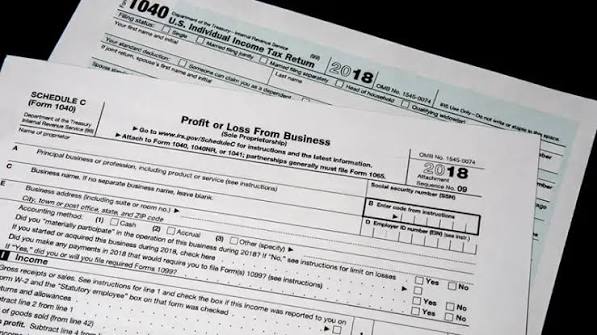
- Use Schedule SE to compute self-employment tax. Schedule SE is where you calculate the Social Security and Medicare tax on your freelance net earnings. The form uses your net profit from Schedule C and applies the tax rules for self-employed workers. Confirm that you are using the correct net profit figure and that the form reflects any special adjustments the instructions allow. A problem appears if you skip Schedule SE entirely or use it when your profit belongs to another type of entity.
- Review whether estimated tax payments should have been made. If your freelance income is not covered by withholding, you may need estimated tax payments during the year, so consult the IRS instructions or get a tax professional involved if you are unsure. Compare what you paid in with what you owe based on your current return. Check payment dates and amounts from your IRS account or your records. A problem shows up when the tax return is correct but you still face underpayment penalties because nothing was paid during the year.
- File the forms together with the rest of your return. Schedule C and Schedule SE are usually attached to Form 1040. Keep copies of the 1099-NEC, receipts, mileage logs if relevant, and your calculation worksheets, along with the supporting records the IRS instructions ask you to keep. Check that the final numbers on each form match the source records. A problem is a clean-looking return that does not tie to your underlying books, because that is where correction notices start.
Short version? The 1099-NEC is usually just an information slip; Schedule C reports the business; Schedule SE calculates the self-employment tax tied to that business profit.
Critical Checkpoints: What to Verify Before Moving Forward
I like to check four things before I treat a freelance return as ready: identity, income completeness, expense support, and form flow. And yes, I would still confirm the details with a tax professional if the return is unusual.
First, verify identity details. Your name and taxpayer ID should match across the tax return, 1099-NEC forms, and your records. A wrong SSN or EIN can confuse matching systems and slow down processing.
Second, verify gross receipts. Gross receipts are your total business income before expenses. Do not reduce them because a client later disputed an invoice unless your records and the tax year actually support an adjustment. Make sure you included income from every source, including smaller clients and platform payments.
Third, verify expense support. The IRS expects business deductions to be ordinary and necessary, which in plain English means common for your line of work and helpful for running it. I would review each major expense and ask: if someone asked why this was business-related, could I explain it without stretching?
Fourth, verify the form trail. Income goes onto Schedule C, net profit flows to your main return, and self-employment tax gets calculated on Schedule SE. If a number looks out of place, stop and trace it backward.
A freelance tax forms explained: 1099-NEC, Schedule C, and Schedule SE article often leaves out the practical check: your tax forms are only as good as the records behind them. Clean records do more than reduce stress; they make it easier to respond if a notice arrives. That part is boring, sure. But boring is cheaper than chaos.
For authoritative instructions, I would look at the IRS pages for Schedule C (Form 1040) and Schedule SE (Form 1040). Those pages point to the current instructions and are more reliable than blog summaries when the rules change.
Warning Signs: When to Stop and Get Help
You have mixed business structures: If your freelance work sits inside an LLC, partnership, or S corporation, the filing path can change — stop and ask a tax professional which forms apply.
You received a 1099-NEC that includes reimbursements: If the payer reported travel or equipment reimbursement as income, your records may not match the form — ask for a corrected form or professional guidance.
Your income spans multiple states: If you performed work in different states or had clients in different jurisdictions with special rules, filing can become state-specific — get help before filing.
You have a loss and a large tax bill anyway: If Schedule C shows a loss but you still owe a lot, another issue may be driving the result, such as prior-year adjustments or unrelated income — have someone review the whole return.
You are unsure whether an activity is a business or a hobby: If you are not operating with a profit motive, the deduction rules can change sharply — do not guess.
You used personal accounts for all business money: If your records are tangled and you cannot cleanly separate business from personal transactions, the return may still be possible, but it is much easier to misclassify items — get help before the deadline if the amounts are material.
The cost of pushing through these situations alone is not just a form error. It can mean underreported income, missed deductions, penalties, or a notice that forces you to reconstruct the year under pressure.
The Most Common Mistakes (and Their Real Consequences)
-
Reporting only the 1099-NEC amounts and ignoring other income.
Consequence: underreported income if a client paid you without issuing a form.
Correct alternative: include all freelance income, whether or not a form arrived. -
Deducting personal expenses because they felt work-related.
Consequence: overstated deductions and a higher audit or notice risk.
Correct alternative: deduct only the business-use portion that you can support. -
Skipping Schedule SE because “the income already showed up elsewhere.”
Consequence: self-employment tax may be missing from the return.
Correct alternative: calculate it whenever the rules require it for your net freelance profit. -
Using the wrong tax year.
Consequence: income or expenses can land in the wrong return.
Correct alternative: match each item to the year you actually received the income or incurred the expense, based on your tax method and records. -
Not saving source documents.
Consequence: you may be unable to defend deductions or explain differences later.
Correct alternative: keep invoices, receipts, platform statements, and bank records together. -
Treating estimated tax as optional because no one withheld from the paycheck.
Consequence: underpayment charges or a surprise balance due.
Correct alternative: review estimated tax needs during the year, not only at filing time, and confirm the plan with a tax professional if your income changes sharply.
The pattern behind most mistakes is simple: people focus on the form names instead of the underlying records.
Edge Cases and Modified Approaches
Not every freelancer uses the same path. A few situations need a modified approach.
If you never receive a 1099-NEC, nothing magical changes. You still report the income. The absence of a form is not the absence of tax.
If you receive both W-2 wages and freelance income, keep the streams separate. W-2 income belongs on the wage section of your return; freelance net profit goes on Schedule C and may also trigger Schedule SE. Mixing them is a common source of confusion.
If you have a side business with very small activity, the bookkeeping burden may feel disproportionate, but the reporting rules still apply. The scale of the income does not erase the filing obligation.
If your business has losses, that does not automatically make the return wrong. But repeated losses can raise questions about whether the activity is truly a business, so the documentation matters more, not less.
If you work through a marketplace or app, I would pay close attention to how the platform classifies payments and fees. Sometimes the gross amount and the net deposit differ, and your tax reporting needs the gross side plus any legitimate deductions for fees.
If you are outside the United States or have non-U.S. tax obligations, stop using this as your roadmap. 1099-NEC, Schedule C, and Schedule SE are U.S. forms, and other countries use different systems entirely.
What to Expect: Realistic Timeline and Outcomes
The process is usually less about one dramatic filing moment and more about a sequence: collect records, reconcile income, categorize expenses, calculate profit, then attach the forms to the return. If your records are organized, the actual form filling can be quick. If they are not, the work shifts into cleanup.
A realistic outcome for a simple freelance return is clarity: you know what you earned, what you spent to earn it, and how that flows into tax. A less pleasant but common outcome is a balance due, because freelance income often arrives without withholding. That is not a filing failure; it is just how the tax system treats self-employment income, though you should still check whether estimated tax payments were required and consider professional advice if the balance is large.
What I would not expect is a perfectly smooth first pass if your records are messy. The cleanup can uncover missing payments, duplicate expenses, or payments that were booked incorrectly. That is normal, but it is also the point where a professional can save time and reduce costly mistakes.
FAQ
Do I need a 1099-NEC to report freelance income?
No. You report the income even if no form was issued.
What does Schedule C do?
It reports your business income and business expenses so you can arrive at net profit or loss.
Why does Schedule SE matter?
It calculates self-employment tax on qualifying freelance net earnings.
Can I deduct every expense related to freelancing?
No. The expense needs a real business connection and should be supportable with records.
What if my situation feels more complicated than this article?
That is usually the right moment to consult a qualified tax professional for your own circumstances.