Last updated: August 11, 2026
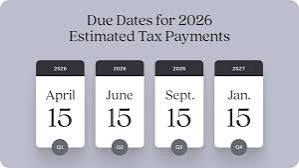
Quick Answer: Four federal estimated payments usually cover freelancers, and the IRS generally sets the due dates for April 15, June 15, September 15, and January 15. For a U.S. freelancer who expects tax beyond what withholding handles, the real issue is plain: when do I pay, how do I figure out the payment, and what do I do if my income is uneven? I’ll answer that head-on. This is information, not financial advice, and you should consult a qualified tax professional for your own situation.
Quick Facts / Key Takeaways
- Federal estimated tax payments are generally due 4 times a year.
- For many freelancers, the key deadline set is April 15, June 15, September 15, and January 15.
- Estimated tax usually covers income tax plus self-employment tax.
- Use net profit, not gross receipts, to estimate tax.
- Withholding from a W-2 job or a spouse’s wages can sometimes reduce what you need to pay.
- The IRS is the authoritative source for Form 1040-ES and estimated tax rules.
- If your income is uneven or cross-border, consult a tax professional before relying on a generic calculator.
Who This Applies To — and Who Should See a Professional Instead

U.S. freelancers, independent contractors, sole proprietors, gig workers, and anyone else who earns money without normal withholding are in scope here. Side income counts too — freelance writing, design, consulting, rideshare work, tutoring, online selling, or similar self-employment income all fit.
Here’s the basic rule: if you expect to owe at least a certain amount when you file your return, estimated payments may be part of your year. That bill usually includes federal income tax and self-employment tax, meaning the Social Security and Medicare tax on net self-employment earnings. The exact threshold and payment rules can change, so I would verify them on the IRS site or with a tax professional before leaning on a generic article.
Not everyone should DIY this. I’d stop and get professional help if any of these are true:
- You also have wage income with complicated withholding decisions.
- You have multiple freelance businesses or a mix of W-2, 1099, rental, and investment income.
- You had a major income swing this year.
- You are newly self-employed and do not know whether prior-year tax safe harbor rules help you.
- You live part of the year outside the U.S. or owe tax in more than one country.
- You recently formed an LLC or S corporation and are unsure how that changes your payment structure.
A calendar alone won’t cut it if your income is irregular, your books are behind, or last year’s tax bill could affect safe harbor calculations. In those situations, the date matters — but the math matters more. Honestly, that’s where people get burned.
Table of Contents
- Who This Applies To — and Who Should See a Professional Instead
- The Step-by-Step Process for Federal Quarterly Tax Payment Deadlines for Freelancers (Done Correctly)
- Critical Checkpoints: What to Verify Before Moving Forward
- Warning Signs: When to Stop and Get Help
- The Most Common Mistakes (and Their Real Consequences)
- Edge Cases and Modified Approaches
- What to Expect: Realistic Timeline and Outcomes
- FAQ
The Step-by-Step Process for Federal Quarterly Tax Payment Deadlines for Freelancers (Done Correctly)

The schedule itself is simple enough. The tricky part is the amount — not the date — because that payment has to come from a real estimate, not a wild guess.
- Confirm that you actually need estimated payments. Start with your expected freelance profit, then compare your full tax picture against IRS estimated-tax rules. Verify whether withholding from wages or a spouse’s wages already covers enough. A problem shows up when gross receipts get treated like profit or self-employment tax gets ignored.
- Collect year-to-date income and expense records. Pull invoices, bank deposits, payment-platform reports, mileage logs, software subscriptions, home office records, and contractor payments. Check that the records support net income, not just money received. A problem shows up when deposits do not match invoices or business spending gets mixed with personal spending.
- Estimate net self-employment income for the year. Net income means business income minus ordinary and necessary business expenses. Confirm that you are not double-counting deductions or leaving out obvious costs. A problem shows up when the estimate jumps wildly from month to month because the bookkeeping is incomplete.
- Estimate federal tax on that income. Usually, that means income tax plus self-employment tax, adjusted for deductions and any withholding you already have. Make sure you are using the current year’s tax rules, not last year’s numbers copied forward without review. A problem shows up when self-employment tax is left out, since it is separate from income tax.
- Choose a reasonable payment method. Most freelancers use IRS Direct Pay, the Electronic Federal Tax Payment System, or another IRS-approved electronic method. Verify the payment is tagged as estimated tax for the correct tax year and quarter. A problem shows up when a payment lands in the wrong period or gets coded as the wrong tax type.
- Make each payment by the due date for that quarter. Federal estimated taxes are generally due in four installments during the year. The IRS publishes the exact due dates, and they can shift if a date lands on a weekend or holiday. Check each deadline on the IRS Estimated Taxes page before you send money. A problem shows up when you assume the same calendar dates every year and never check.
- Track what you paid and reconcile after each quarter. Keep the confirmation number, amount, date, and tax year/quarter. Verify the payment posted correctly to your IRS account or transcript. A problem shows up when your records and IRS records do not match, because that can create penalty issues later.
- Update the estimate when income changes. If your freelance income rises, falls, or stops, recalculate rather than using the original estimate all year. Verify whether you should annualize income instead of paying evenly. A problem shows up when a slow first quarter is followed by a very profitable third quarter and you never adjust.
For the deadlines themselves, I would rely on the IRS Estimated Taxes guidance and the instructions for Form 1040-ES. The IRS is the authoritative source here: IRS Estimated Taxes and Form 1040-ES.
Critical Checkpoints: What to Verify Before Moving Forward
Before you pay anything, I would check four things: whether estimated payments are required, how much income is really taxable, whether withholding already covers part of the bill, and whether your payment is labeled correctly.
First, confirm your filing status and income mix. A freelancer with no other tax withheld sits in a very different spot from a freelancer whose day job already withholds a large amount. Withholding can often stand in for estimated payments if it is enough and timed properly.
Second, separate gross receipts from taxable profit. Gross receipts are every dollar you collected. Profit is what remains after deductible business expenses. Skip expenses and you may overpay. Invent them and you may underpay — then a filing problem shows up later.
Third, check whether self-employment tax applies. Plenty of new freelancers focus only on income tax and miss the payroll-tax side of self-employment. That mistake can make the quarterly estimate far too low. Ouch.
Fourth, verify the timing. The IRS cares about payment dates, not your accounting month-end. One day late can still expose you to penalties for that quarter.
I also like to double-check whether a payment should be larger because of prior-year tax. In many cases, safe harbor rules let you avoid an underpayment penalty if you pay enough during the year based on prior-year liability or current-year liability, depending on the facts. The downside is real: safe harbor is not a free pass, and it can push you into a larger payment than your current-year income would otherwise suggest.
Warning Signs: When to Stop and Get Help
Highly uneven income: Your revenue spikes in one quarter and collapses in another — Use an annualized approach or get a preparer to model payments, because even quarterly payments can be mismatched if income is lumpy.
Multiple income types: You have freelance income, wages, and maybe investment or rental income — Ask for help, because one source can offset another in ways that change your estimate.
Large prior-year balance due: You owed a meaningful amount last year and have not adjusted withholding or estimates — Stop and review safe harbor rules, since repeating the same pattern can trigger avoidable penalties.
Missing records: Your bookkeeping is incomplete or your bank deposits do not reconcile — Pause and reconstruct the records before paying, because a guess can be wrong in both directions.
Recent business structure changes: You switched from sole proprietor to LLC or S corporation — Confirm how the entity is taxed, because the payment rules can change and payroll may enter the picture.
Cross-border issues: If you live abroad, worked abroad, or owe tax in another country, get professional advice, because foreign tax credits, residency rules, and treaty issues can change the calculation. See the IRS guidance on Foreign Tax Credit and International Taxpayers.
The Most Common Mistakes (and Their Real Consequences)
-
Waiting until the filing deadline instead of paying quarterly.
Consequence: Underpayment penalties can build even if you eventually pay the full tax on your annual return.
Correct alternative: Use the IRS quarterly schedule and make each installment on time. -
Estimating from gross income instead of net profit.
Consequence: You may overpay dramatically, which strains cash flow.
Correct alternative: Subtract ordinary and necessary business expenses before estimating tax. -
Forgetting self-employment tax.
Consequence: The estimate is too low, and the year-end balance due is larger than expected.
Correct alternative: Include both income tax and self-employment tax in your projection. -
Using last year’s numbers without checking for income changes.
Consequence: A stable prior year can disguise a much higher current-year bill.
Correct alternative: Recalculate whenever revenue changes materially. -
Sending the payment under the wrong tax year or quarter.
Consequence: The IRS may apply it incorrectly, and your records will not match the agency’s records.
Correct alternative: Confirm the tax year, quarter, and payment type before submitting. -
Ignoring state estimated taxes.
Consequence: Federal compliance is only part of the picture; state penalties can still appear.
Correct alternative: Check your state’s estimated tax rules separately.
Edge Cases and Modified Approaches
A standard four-equal-payment approach does not fit every freelancer.
If your income is highly seasonal, I would consider annualizing income. Annualized estimated tax methods try to match payments to the income actually earned in each period, which can be fairer than sending the same amount every quarter. The trade-off is more paperwork and a higher chance of calculation errors.
Suppose you had a profitable W-2 job but moved into full-time freelancing midyear. Withholding from earlier wages may cover more of the year’s tax than you think. In that case, the right move is not automatically a large quarterly payment; it is a fresh calculation based on total-year income and tax already withheld.
Married couples filing jointly can sometimes use one spouse’s withholding to offset the other spouse’s freelance tax burden. That can make life easier, but it can also hide a growing self-employment liability if you are not watching the numbers closely.
Operate through an S corporation? Then the estimate may look different because shareholder wages and distributions are treated differently from sole proprietorship income. Consult a tax professional, because this is a different framework.
If you are new to freelancing and do not have a prior-year tax baseline, start with a conservative estimate and update it often. The drawback is obvious: conservative estimates can tie up cash. The upside is fewer surprises when filing time arrives.
What to Expect: Realistic Timeline and Outcomes
The quarterly schedule is predictable, but the result only looks good when the estimate is good.
At the start of the year, I would gather records and build a rough projection. Before each due date, I would update that projection with year-to-date numbers. After payment, I would save proof and compare it to my own tracking sheet. At filing time, I would reconcile what I paid against the actual return and figure out whether I still owe or overpaid.
A good outcome is not “no tax.” A good outcome is that your payments roughly match your real tax liability, your cash flow does not collapse, and you avoid the unpleasant surprise of a large bill plus penalties. A less-than-ideal but manageable outcome is that you overpay and get a refund later. That is not efficient, but it is usually better than being short.
Quarterly estimated tax payments have one big limitation: forecasts drive them. Freelance income is rarely smooth, so forecasts can be wrong. Because of that, I treat these payments as a living calculation, not a once-a-year task, and I would consult a tax professional if the numbers are changing fast.
For the official federal guidance, I would keep the IRS pages for Estimated Taxes and Form 1040-ES handy and confirm each deadline there.
FAQ
Do freelancers have to pay quarterly taxes?
Not always. Many do if they expect to owe enough tax at year-end and do not have enough withholding to cover it.
What are the federal quarterly tax deadlines?
The IRS sets specific quarterly due dates and can adjust them when they fall on weekends or holidays, so I would check the IRS Estimated Taxes page each year instead of memorizing dates.
Can I pay one big amount instead of four payments?
Sometimes, but timing matters. A large year-end payment may not prevent underpayment penalties for earlier quarters.
Do I pay federal and state quarterly taxes together?
Usually no. Federal and state estimated taxes are separate systems with different rules and deadlines.
What if my income changes after I make a payment?
Recalculate. Freelance income changes often, and later payments may need to be higher or lower than earlier ones.
Conclusion
Federal quarterly tax payment deadlines for freelancers are manageable when you track income, expenses, withholding, and timing together. The safest approach is to use net profit, verify the IRS due dates each year, and update the estimate whenever income changes. If your situation includes uneven earnings, mixed income, S corporation pay, or cross-border tax issues, consult a qualified tax professional before you rely on a generic estimate.