
Last updated: October 24, 2026
Key Takeaways
- Self-employment tax covers the freelancer’s share of Social Security and Medicare taxes that would otherwise be split with an employer.
- IRS rates and thresholds vary by tax year, so use that year’s Schedule SE instructions.
- Start with net profit from the self-employment activity.
- Self-employment tax usually applies to net freelance profit, not every business dollar.
Self-employment tax is the tax freelancers pay on net profit from self-employment, and the calculation starts with your business profit, not your gross receipts. This article explains how to calculate self-employment tax for freelancers, including what counts, how Schedule SE works, how Social Security tax and Medicare tax fit in, and where the deduction for one-half of self-employment tax enters the picture. This is information, not financial advice; for your own situation, consult a qualified tax adviser.
Who this applies to, and what you need first

This applies to freelancers, independent contractors, sole proprietors, and other people with self-employment income in the United States who need to calculate self-employment tax on a return filed with the IRS. It assumes you already know your business income and expenses well enough to figure out your net profit, usually from Schedule C or another business record, and that you have kept mileage logs, receipts, invoices, and platform statements for the year. If your work is through a partnership, S corporation, or a multi-country setup, the standard solo-freelancer calculation may not fit cleanly.
The key number is net earnings from self-employment, which is the amount the tax is based on after the IRS formula adjusts your business profit. That is not the same as cash in your bank account. For example, if you invoiced $18,000 during the year and had $5,000 of ordinary business expenses, you would not start with $18,000 for this tax; you start with profit. The calculation begins with the profit figure, then applies Schedule SE rules.
This guide is for the calculation itself, not the full estimated-tax workflow. If you also need the payment timing piece, the hub on freelancer tax planning and estimated payments belongs next. The job here is narrower: get the self-employment tax number right before you put it into the rest of your return.
What self-employment tax actually covers
Self-employment tax covers the freelancer’s share of Social Security tax and Medicare tax that would otherwise be split between an employee and an employer. On a W-2 job, those payroll taxes are shared. On self-employment income, the freelancer pays both sides through self-employment tax, using Schedule SE.
That sounds broader than it is. The tax does not apply to every dollar you move through your business account. It is tied to net profit, then adjusted to net earnings from self-employment. In plain terms, the IRS does not tax your gross invoices the same way it taxes business profit. If your expenses are high enough to erase profit, your self-employment tax base may shrink to zero for that business activity.
The standard calculation is built around one idea: take your net profit, apply the self-employment tax rules, and then split the result into the Social Security tax portion and the Medicare tax portion. The IRS publishes the current Schedule SE instructions, and those rules can change. A freelancer should check the current IRS instructions for the tax year being filed rather than relying on a stale blog post or last year’s spreadsheet. See the IRS Schedule SE instructions and the IRS self-employment tax guidance on IRS.gov.
The deduction for one-half of self-employment tax matters here too. It does not reduce the tax you owe on Schedule SE dollar for dollar in the moment; instead, it is generally an income-tax deduction on the return. Consult the current IRS instructions or a tax professional if you are not sure where to place it on your return.
How do you calculate self-employment tax?
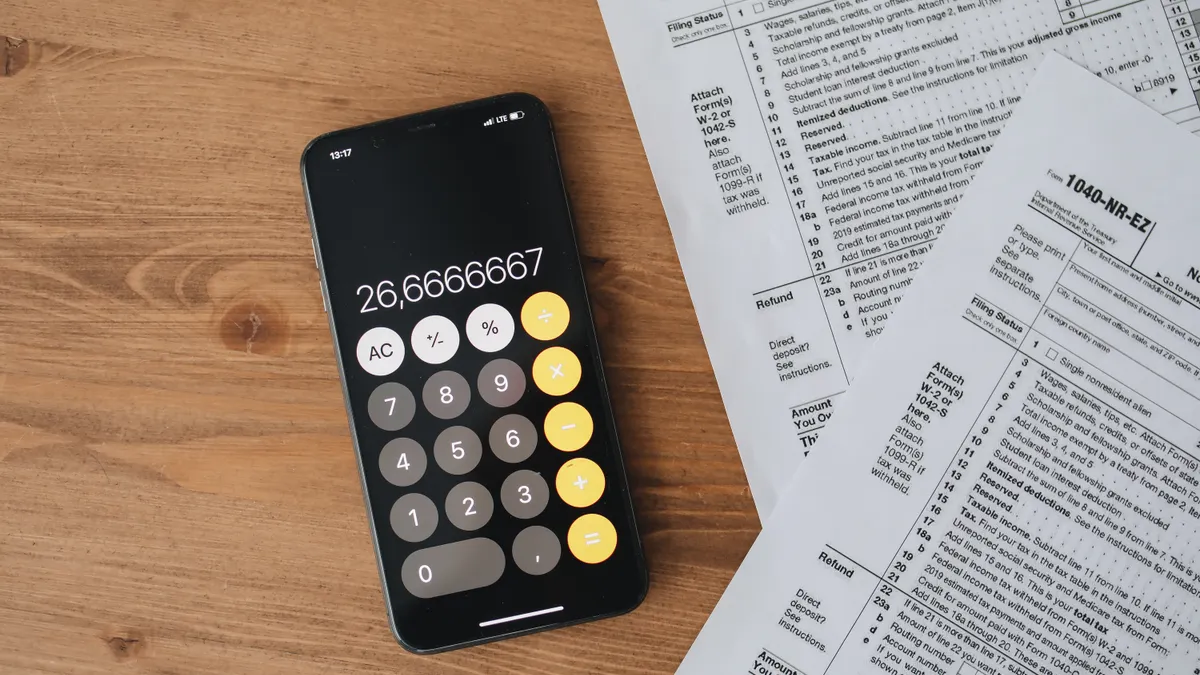
You calculate self-employment tax by taking net profit, converting it to net earnings from self-employment, applying the Schedule SE rate structure, and then separating the result into Social Security tax and Medicare tax. The exact thresholds and rates depend on the tax year, so the IRS instructions for that year control the math. For the current year, use the IRS Schedule SE instructions and the IRS self-employment tax page.
How to calculate self-employment tax, step by step
-
Start with your net profit for the self-employment activity. Use your business profit after expenses, not gross receipts. If your bookkeeping shows $12,000 of income and $4,500 of ordinary and necessary expenses, your net profit is $7,500. Verify that personal expenses, owner draws, and loan repayments are not mixed into the business total. A problem sign is using deposits from a payment app instead of actual profit.
-
Separate self-employment income from non-self-employment income. Only income that qualifies as self-employment income belongs in this calculation. Wages from an employer, interest, dividends, and most investment income are not part of Schedule SE. Verify that the amount you are using comes from freelancing or other self-employment work. A problem sign is including a 1099 with mixed payments without checking what the payment was for.
-
Determine net earnings from self-employment. Schedule SE applies an adjustment to net profit before the tax rate is applied. This is the figure the IRS uses as the tax base, not simply the profit on your bookkeeping report. Verify you are following the current Schedule SE instructions for the tax year. A problem sign is copying the profit number straight into the tax calculation without the Schedule SE adjustment.
-
Apply the Social Security tax portion first. Self-employment tax includes the Social Security tax component up to the annual wage base set by the IRS for that year. If your earnings are below that ceiling, all of the applicable earnings may fall under the Social Security tax limit; above it, only the amount up to the limit is subject to that part. Verify which tax year you are filing, because the cap changes. A problem sign is using last year’s ceiling.
-
Apply the Medicare tax portion to the applicable earnings. Medicare tax applies to self-employment earnings without the same wage-base cap used for Social Security tax, though additional Medicare tax rules can affect higher-income taxpayers. Verify whether your income level makes the additional Medicare tax relevant under the current year’s rules. A problem sign is stopping the calculation after Social Security tax and forgetting the Medicare tax layer.
-
Add the two parts to get total self-employment tax. The total is the combined Social Security tax and Medicare tax shown on Schedule SE. Verify that your total matches the Schedule SE result before you transfer it to the return. A problem sign is double-counting one of the components or using a rounded figure too early.
-
Calculate the deduction for one-half of self-employment tax. Half of the self-employment tax is generally deductible on the income tax return, separate from the self-employment tax itself. Verify that you use the figure exactly as shown by the return instructions and that you place it in the right section of the form. A problem sign is subtracting the deduction from the tax owed instead of treating it as a separate income-tax deduction.
-
Check the result against your records and the IRS instructions. Compare the final numbers with your bookkeeping, Schedule SE, and the current IRS guidance for the filing year. Verify that the tax year, filing status, and any special rules all match your return. A problem sign is using a calculator result that does not line up with the form’s lines.
A worked calculation often looks simple once the pieces are separated, but the biggest errors happen at the handoff points: profit to net earnings, and self-employment tax to deduction. A spreadsheet can do the arithmetic in 30 seconds; the hard part is feeding it the right numbers.
What counts toward self-employment tax, and what does not?
Self-employment tax usually applies to your net profit from freelance work, not to every dollar that touches your business. That distinction keeps the calculation from becoming inflated by cash flow that is not income.
A common example is a freelancer who receives a 1099-NEC for client work and also gets reimbursed for a purchased item. The payment for the work is part of business income. Depending on how it was handled and documented, a reimbursement may not be part of self-employment income. Another example is a designer who has both freelance income and a W-2 job. The W-2 wages are generally not part of Schedule SE, while the freelance net profit is.
Expenses matter because they reduce net profit before the self-employment tax calculation starts. Ordinary and necessary business expenses lower the base. A home office deduction, if allowed, can also affect net profit. So can mileage, software subscriptions, subcontractor costs, and professional fees when they are properly deductible business expenses. The point is not to maximize deductions for their own sake; it is to measure profit correctly.
What usually does not count: employee wages, investment income, and personal money moved between accounts. Also excluded are amounts that are not actually your business income. A deposit is not proof of taxable self-employment income by itself. The IRS looks at the character of the income, not just the bank feed.
This is where freelancers get tripped up. A platform payout can include service fees, refunds, or non-income items, so it should be reconciled to bookkeeping before you calculate self-employment tax. If the bookkeeping is sloppy, the self-employment tax calculation will be sloppy too. If the activity is mixed with another business or another household member’s income, separate the records before you do Schedule SE.
What should be checked before you file?
The calculation should be checked against Schedule SE, the IRS instructions for the year, and your underlying profit records before you file. This three-way check catches most avoidable errors.
First, confirm that your profit number is final. If the Schedule C figure is still changing because a receipt is missing or a client payment was reclassified, the self-employment tax number is not ready either. Second, confirm that you used the correct year’s IRS rules. Rates, limits, and thresholds change over time, so last year’s calculator is not a substitute for the current instructions. Third, confirm that the deduction for one-half of self-employment tax is going in the right place on the return rather than being netted against the tax itself.
For readers who want the IRS source material, the official Schedule SE instructions are the right starting point, along with the IRS self-employment tax pages on irs.gov. Those are the pages that control the form logic, not a generic tax blog. If you are comparing outputs from tax software, the software should match the current IRS form structure, not the other way around. See also the IRS instructions for Schedule C if you are checking the profit number itself.
A good result looks boring: the profit figure ties to your records, the Schedule SE lines reconcile, and the final tax is consistent with the current-year instructions. A bad result looks “close enough” but has no explanation for why the math changed from one draft to the next.
When the standard calculation does not fit
The standard Schedule SE approach does not fit every freelancer, and forcing it can produce the wrong number. Here is when to stop and get qualified help for your own situation.
You have partnership income, S corporation wages, or multiple business entities: the self-employment tax rules may apply differently to each stream — a standard solo-freelancer calculation can miss special treatment or exclude income that belongs elsewhere. Consult a tax professional if your income is split across entity types.
You have foreign income or work in more than one country: international rules can change what is subject to U.S. self-employment tax — you may need cross-border tax advice before filling out Schedule SE. See the IRS international tax pages if that applies.
You have a loss, not a profit, from the business: the self-employment tax base may be zero, but the rest of the return can still be affected — check the filing position instead of assuming the whole return is finished.
You expect additional Medicare tax to apply: higher-income cases can change the math — the standard worksheet may not be enough on its own. Consult the current IRS instructions or a tax professional if you are near that threshold.
Your records mix personal, contractor, and reimbursed amounts: the base number may be unreliable — clean up the bookkeeping first or have a qualified preparer reconstruct it.
You are trying to apply rules from an older tax year: the IRS changes rates and thresholds over time — use the current-year instructions or you will build the wrong answer from the start.
The consequence in each case is the same: the plain Schedule SE formula may be incomplete. The fix is not guesswork. It is getting the classification right before the arithmetic is trusted.
The mistakes freelancers make with Schedule SE
The most common mistakes are not arithmetic mistakes; they are classification mistakes that push the wrong number into the math. Those errors can change both self-employment tax and income tax.
-
Using gross receipts instead of net profit. This overstates the tax base and can make the tax look larger than it should be. The correct alternative is to subtract ordinary and necessary business expenses first.
-
Forgetting the Schedule SE adjustment. Some people take net profit and apply the tax rate directly. That can produce the wrong base. The correct alternative is to use the Schedule SE instructions to determine net earnings from self-employment.
-
Mixing employee wages into the calculation. W-2 wages are not the same as freelance net profit. The consequence is a bloated tax number. The correct alternative is to keep wage income on the wage side of the return.
-
Ignoring the deduction for one-half of self-employment tax. That leaves money on the table on the income-tax side. The correct alternative is to place the deduction where the return instructions say it belongs.
-
Using outdated rates or limits. The IRS wage base and related rules change by tax year. The consequence is a calculation that may look polished but is wrong. The correct alternative is to use the current-year IRS Schedule SE instructions every time.
-
Treating a payment platform statement as a tax form. Payment records help, but they are not the same as a final tax classification. The consequence is misreporting refunds, fees, or reimbursements. The correct alternative is to reconcile platform data to your bookkeeping before entering the numbers.
What does a correct result look like?
A correct result is the one that matches your records, fits the IRS form, and uses the current year’s rules without forcing the numbers. That means your net profit is cleanly identified, your net earnings from self-employment are computed under Schedule SE, and the Social Security tax and Medicare tax parts are separated correctly.
The final total should not surprise you if the bookkeeping was done during the year. If it does, the problem is usually upstream: missing expenses, mixed income, or a stale tax year. A freelancer who keeps monthly records can often spot the issue in 10 minutes, long before filing time.
If those numbers are consistent, the calculation is probably sound. You should be able to explain where each number came from — gross receipts, expenses, net profit, Schedule SE adjustment, tax component, and deduction for one-half of self-employment tax. If not, the next step is to review the bookkeeping and the IRS instructions before filing.
Drafted with AI; not yet reviewed by a person.