
Last updated: November 05, 2026
Key Takeaways
- Most freelancers can use an SSN; an EIN is often optional for solo work.
- The decision usually depends on paperwork, privacy, and expected growth over the next 12 months.
- Check whether the requester needs a tax ID or only wants one for its records.
- Get qualified help when a sole proprietor setup no longer fits your situation.
For most freelancers, a Social Security number is enough to start, and an EIN is optional. The catch is that an EIN, which is an Employer Identification Number issued by the IRS, can still make some parts of freelance life easier: onboarding a business client, opening a business bank account, and keeping your SSN off forms you hand out. For the IRS rules and form guidance, see Employer ID Numbers and Form W-9.
This article is information, not financial advice. Tax rules vary by country and can change, so if your situation is unusual, a qualified tax adviser or CPA should review it.
Who this applies to, and what it assumes you already know

This applies to freelancers working as a sole proprietor in the United States who are deciding whether to give a client an SSN or get an EIN instead. It assumes you already know the basics of getting paid for freelance work and that you have a way to receive money, such as a personal bank account or a business account. If you are forming a company, dealing with employees, or working outside the U.S., the answer can change fast.
The simple rule is this: if you are a sole proprietor and you have no employees, you can usually use your SSN on tax forms and many client onboarding forms. The IRS does not require every freelancer to get an EIN. But “allowed” is not the same as “best.” An EIN can reduce privacy exposure because your SSN stays off some paperwork, and some companies prefer to collect an EIN from independent contractors as part of vendor setup.
This is also the right page if you are trying to decide whether an EIN helps with a W-9 form, a business bank account application, or payroll tax registration. It is not the right page if you need help choosing a business structure, filing a 1099-NEC, or figuring out Schedule C. Those are separate problems and belong on other pages in the freelance tax setup and entity choice hub.
One practical note: if you plan to hire employees later, the EIN question changes. Payroll tax forms and wage reporting usually require an EIN, not just an SSN. That is one of the main reasons freelancers get one before they absolutely need it.
Do freelancers need an EIN or can they use an SSN?
Because a sole proprietor is the same taxpayer as the business, most freelancers can use an SSN, and many never need an EIN at all. A sole proprietor who works alone can usually identify themselves with an SSN on a W-9 form and on other tax paperwork, because the IRS treats the person and the business as the same legal taxpayer in that setup.
The part that gets missed is that “can use an SSN” does not mean “must use an SSN.” An EIN is often useful even when it is not required. It gives you a business tax ID separate from your personal number, which is why many freelancers choose one for client onboarding, privacy, and banking.
A plain-English way to think about it: the SSN is your personal tax number; the EIN is the business’s tax number. If you are a sole proprietor with no employees, the business is still you for federal tax purposes, but the EIN lets you present the business side of the relationship without putting your personal number on every form.
A separate number also helps when a client, bank, or payment platform uses business workflows. It can reduce confusion on forms, even though it does not change your tax filing status. It also gives you a cleaner way to share one identifier across vendors, invoices, and account applications.
An EIN adds one more number to manage, and getting one does not change how your freelance income is taxed by itself. It also does not automatically make you “more official” in a legal sense. If a form, bank, or payment processor asks for an EIN because of its own policies, that is a separate issue from IRS rules.
A useful benchmark: if you are filling out a W-9, the form asks for a taxpayer identification number. That can be an SSN or an EIN. If you are opening a business checking account, the bank may ask for an EIN even if the IRS would not require one for your solo work. That is common in practice and worth planning for.
How to decide which number to use on your W-9 and other paperwork

Use your SSN when the form allows it and you have no reason to hide it; use an EIN when you want a business identifier or when a bank, platform, or client setup process asks for one. The choice usually comes down to paperwork, privacy, and where you expect your freelance work to go over the next 12 months.
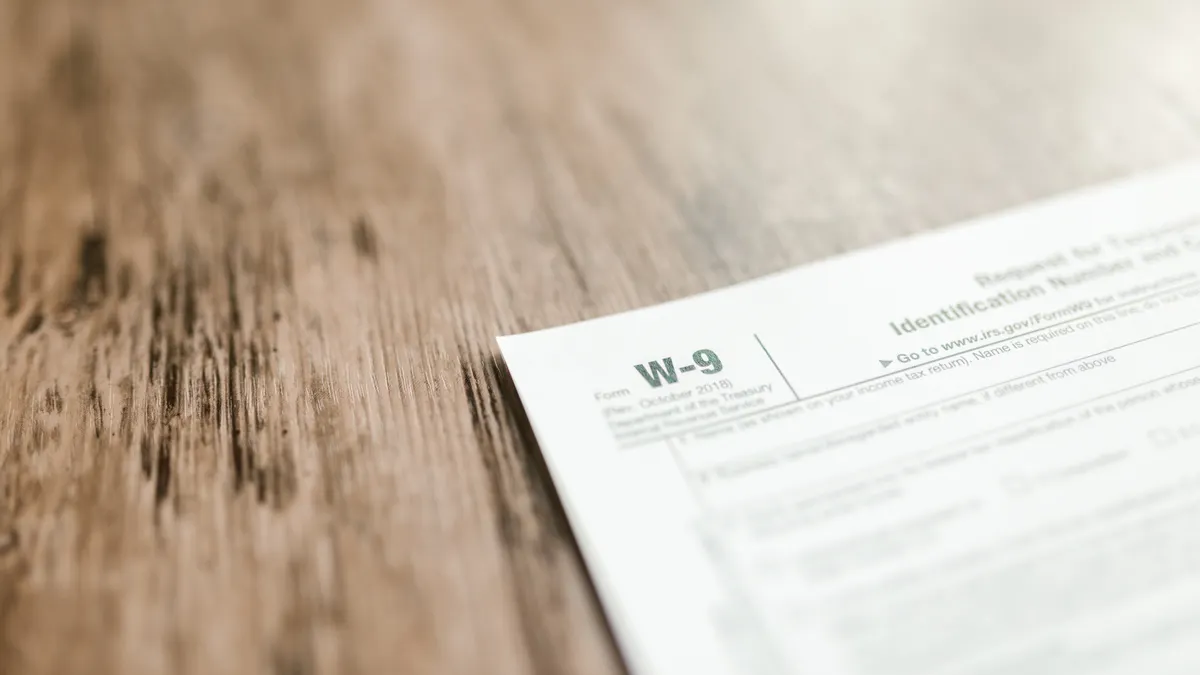
Start with the form itself. The W-9 is the standard IRS form clients use to collect your taxpayer identification number and certification details. If you are a sole proprietor with no employees, the W-9 can usually be completed with either your SSN or your EIN. The name on the form should match your tax return name or your doing-business-as name as instructed by the form, and the number should match that taxpayer identity.
If a client’s onboarding portal asks for a tax ID, the practical question is whether the portal accepts both. Many do. Some only validate one format at a time, and some vendor systems are built around an EIN field even when the tax rule itself does not demand it. If the portal rejects your SSN, an EIN can solve the problem without changing your tax status.
If you want a business bank account, check the bank’s application requirements before you apply. Some banks will open an account for a sole proprietor using an SSN, but many business-account workflows are smoother with an EIN because that is how their systems are built. That is not a tax rule; it is a banking workflow. The same issue can show up with payment processors and bookkeeping software.
A small but important point: if you later hire help and cross into payroll tax territory, the EIN becomes much more than a convenience. Payroll reporting, wage withholding, and employment tax accounts usually rely on it. That is one reason a freelancer who expects to grow into a studio or agency often gets one early.
For the IRS source material, see the agency’s guidance on Employer ID Numbers and Form W-9. Those are the two forms of authority that matter most here.
- Identify your current business setup. Confirm whether you are operating as a sole proprietor with no employees. Verify that your tax reporting is still tied to your personal return. If you are already paying wages or acting through a separate entity, the assumption is wrong and the SSN-versus-EIN choice changes.
- Check the form you are about to submit. Look for a taxpayer identification number field on the W-9, bank application, or onboarding portal. Verify whether the form allows an SSN, EIN, or both. If the field format only accepts nine digits but the surrounding instructions mention a business tax ID, that is a sign to confirm with the requester before submitting.
- Decide whether privacy matters enough to change your default. If you do not want your SSN shared with multiple business contacts, get an EIN first. Verify that you understand the EIN does not make you anonymous; it only keeps your personal number off some paperwork. If you expect to send the same tax ID to several companies, an EIN is usually the cleaner choice.
- Apply for an EIN if it will reduce friction. Use the IRS application process and, if your facts are unusual, consult a tax professional before you file; keep the confirmation notice in a secure file. Verify that the name, responsible party, and mailing address match your records. If the application data does not match your tax identity, stop and fix it before you use the number.
- Update your onboarding documents once. Put the EIN on your W-9 and in any vendor profile that asks for a tax ID. Verify that your legal name and business name line up with the form instructions. If you are using a trade name, check that the record does not create a mismatch with the IRS or bank records.
- Test your banking and payment setup. If you are opening a business checking account, confirm whether the bank wants an EIN, a W-9, or both. Verify that deposits and statements are titled the way you expect. If the bank rejects your application because you used the wrong identifier, the issue is usually format or documentation, not tax status.
- Keep your records together. Save the EIN confirmation, a copy of the W-9 you submit, and the account opening paperwork in one folder. Verify that the number you send to a client is the same one on your tax records. If you have more than one number floating around, that is how mismatched forms start.
- Revisit the choice before you hire anyone. If payroll tax is about to enter the picture, check whether you need additional registrations beyond the EIN. Verify that wage reporting and withholding requirements are covered before the first paycheck goes out. If not, pause and get qualified help.
What to check before you send an SSN or an EIN
Your first check is whether the requester actually needs a tax ID or just wants one for its records. A W-9, for example, is designed to collect taxpayer information from a U.S. payee; other forms are not. If the request is vague, ask what the number will be used for and whether an EIN is acceptable.
Your second check is privacy. An SSN is sensitive personal data, and once it is sent around, you cannot pull it back. If you expect to work with multiple business clients over a year, an EIN often reduces unnecessary exposure. That is especially true if your freelance work includes recurring onboarding, tax questionnaires, or vendor portals.
Your third check is the business account side. A bank or credit union may ask for a business tax ID even when you are a sole proprietor. If you already have an EIN, the application can be simpler because the bank can tie the account to the business number rather than your SSN. Some institutions still ask for both identity details and business information, so the EIN is not a replacement for everything.
Your fourth check is payroll tax. If you ever move from solo work to paying staff, the need for an EIN becomes practical, not optional. That matters because payroll systems, tax deposits, and employment forms depend on a business identifier. You do not want to wait until the first contractor invoice or payroll run to sort that out.
A workable standard is this: if you are sending one form to one payer and you have no privacy concerns, using your SSN is often acceptable. If you will repeatedly hand out the number, if a bank asks for a business identifier, or if you want to separate personal and business paperwork, an EIN is usually the better operational fit.
When a freelancer should stop and get qualified help
Get qualified help when the usual sole proprietor answer stops fitting your actual situation. That is the point where a simple EIN decision can become a tax, payroll, or compliance problem.
You are hiring your first employee: payroll tax rules usually apply, and the EIN becomes part of wage reporting and withholding — stop and confirm federal and state registration before paying anyone.
Your bank rejects the account application: the problem may be your business classification or documentation, not your identity number — ask the bank what exact form it wants before resubmitting.
A client insists on one specific tax ID format: some vendor systems are strict about fields and validation — use the format they accept only if it matches your tax setup, or ask for an alternative intake method.
You changed your business name or address recently: mismatched records can create W-9 and banking problems — verify that the IRS records, bank records, and your forms show the same legal identity.
You are not a sole proprietor anymore: if another entity is involved, the SSN-versus-EIN question may no longer be the right question — get the structure reviewed before you submit anything.
You are unsure whether payroll tax applies: misclassifying a worker or skipping registration can create filing and withholding problems — pause and get a tax professional to review the setup.
The point here is not to scare a freelancer away from using an SSN. It is to stop pretending the simple answer covers every case. A clean solo setup can often be handled with a form and a number. A setup with employees, entity changes, or mixed jurisdictions usually cannot.
The mistakes freelancers make with EINs and SSNs
The most common mistake is treating an EIN as mandatory for every freelancer. That leads people to overcomplicate basic solo work. If you are a sole proprietor with no employees, the IRS does not require an EIN just because you are freelancing. If your facts are unusual, consult a tax professional before deciding. The correct alternative is to check the exact form or account requirement before applying.
Another mistake is giving out an SSN because it is the path of least resistance, then repeating that choice with every new payer. The consequence is unnecessary exposure of personal information. The better alternative is to get an EIN once if you expect repeated onboarding or multiple business relationships.
A third mistake is assuming an EIN changes tax treatment. It does not. Your income does not become “business income” in a new way just because you have an EIN. If you are unsure how the number affects your filing, consult a tax professional. The correct alternative is to treat the EIN as an identifier, not a tax-status switch.
A fourth mistake is mixing the legal name, DBA, and tax number across forms. That can trigger delays with banks and payment systems. The correct alternative is to make sure the name on the W-9 and the account application matches the tax identity the form is asking for.
A fifth mistake is waiting until payroll is already underway. Once employees enter the picture, payroll tax issues get harder to clean up after the fact. The correct alternative is to handle the EIN and registration questions before the first paycheck.
A sixth mistake is using an EIN to avoid thinking about recordkeeping. That can leave you with two identifiers and no system for tracking them. The better alternative is to store the IRS confirmation notice, completed W-9s, and banking records together in one secure place, and to consult a tax professional if the records are unclear.
What an EIN helps with, even when it is not required
An EIN helps most when your freelance business starts looking like a business to other institutions. That usually shows up in three places: onboarding, banking, and future hiring. Since many platforms and banks ask for a business identifier, an EIN can make those workflows easier without changing your tax status.
It can also help with privacy because your SSN stays off some forms. That matters if you work with several clients a year or if you use vendor portals that store tax documents. For a freelancer who expects more than one client relationship, the lower exposure can be a practical benefit.
The same number can also keep your records cleaner. When invoices, W-9s, and bank applications all point to the same business identifier, it is easier to match documents later. That is useful if you ever need to respond to a client, a bank, or the IRS about a filing question.
If your freelance income is still simple, an SSN can be enough. If your setup is growing, an EIN often becomes the smoother operational choice. The key is to choose based on the forms you need to complete now, not on what sounds more professional.
Drafted with AI; not yet reviewed by a person.
